Showing posts with label theology. Show all posts

Wednesday, February 27, 2008

Beauty and Worship, Art for Advocacy, part 6


I would like to talk about Advocacy as prophecy, 'as giving voice to the true under workings of the empire' as Walter Bruggemann might describe it. The story of David and Nathan the prophet show us how ‘story’/art can reframe life and give us an opportunity for personal insight and repentance. In a recent story I read a spiritual director was speaking with an eager young monk. The young monk was ready to receive his spiritual work assignment to help catapult him towards intimacy and union with God. his Spiritual director oddly asked the young monk to read Charles Dickens, David Copperfield. When the young monk complained of such a worldly assignment the spiritual director said that this young monk needed to learn empathy for normal people in normal life before he could journey into the depths of God.

Much of art is there to help us develop a basic empathy for our fellow human beings. When we sit in the others shoes for 200 pages we see the world different. I believe this is the heart of advocacy. No tricks, manipulation, no arm twisting, just getting to know people we usually are separated from through the mediums of art.
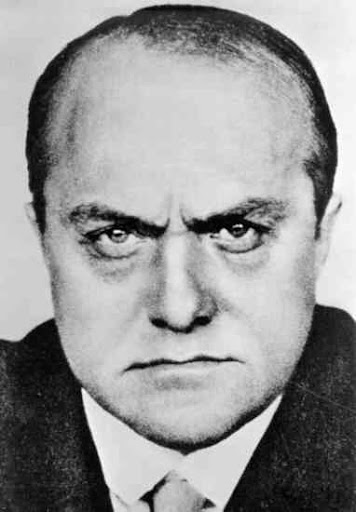

Meet Max Beckman. His painting exposed the Nazi oppression and got him exiled from Germany.
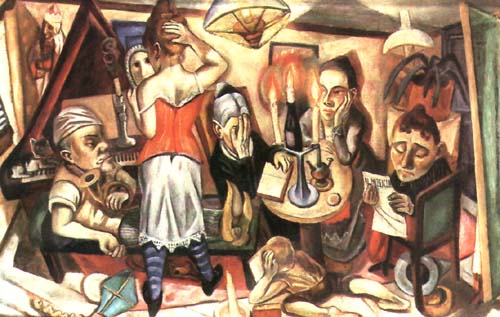
Max Beckman


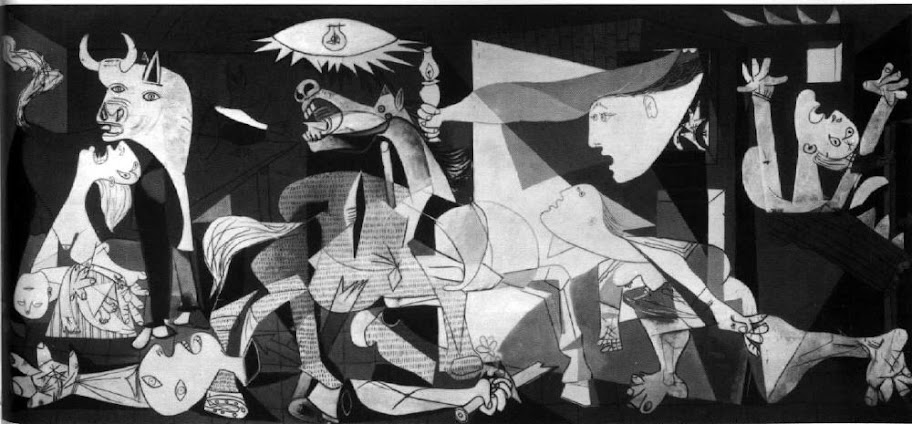
Guiernica, Picasso


Picasso put the city of Guiernica on the map with this devastatingly real depiction of the bombing of that city.
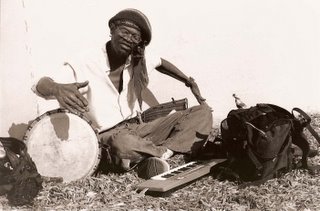
This is a photograph by Seth Allgire.
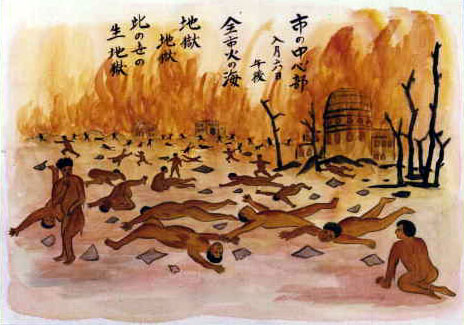
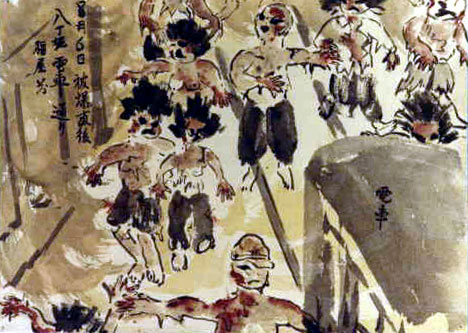
These are drawings done by survivors of Hiroshima. This is a great example of letting the victims tell their own story.

“…behind that frightened practice is a symbol gap in which we do not have symbols that are deep or strong enough to match the terror of the reality. What takes place when symbols are inadequate and things may not be brought to public expression is that the experience will not be experienced…’ p48 from The Prophetic Imagination

In the The National Story Project, we see a similar kind of amplifying of voices. This project gives air time to voices that would not ordinarily be heard. I am such there are many similar projects which could be designed to amplify voices of those we work among.
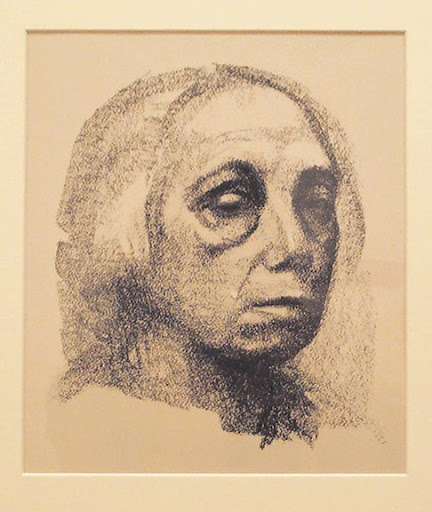

Kathe Kollwitz is another example of illuminating the jewish plight under the Nazi’s. She was a German lady who used wood block printing to print massive amount of pictures showing what was happening to the Jews. Her work is simple and stunningly human.

A more recent example of this kind of global advocacy is Francisco Botero's Abu Ghraib Paintings exposing the horrors of torture in US prison camps. He is giving voice to people who literacy have no advocate...no lawyer.

Kids with Cameras and our Sierra Leone fields, Beauty and Brokenness project in Sierra Leonne again put the cameras into the hands of the kids, letting us see through there eyes.
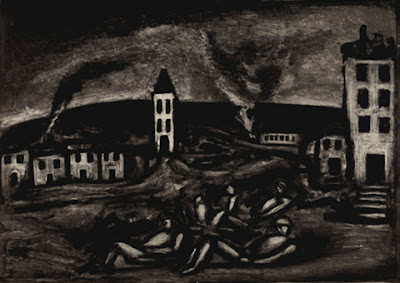

Georges Rouault, from the Miserere Series
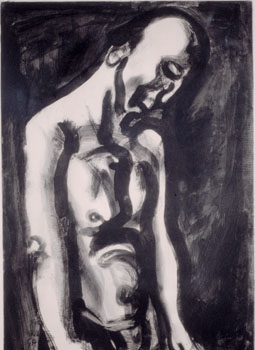
Georges Rouault, from the Miserere Series

By allowing people to see the poor through a humanizing lens, a different angle, stories, songs, pictures, images which give names, face, personality, connect their humanity to ours and evokes a response to their dignity. We certainly do not need to be a Picasso or a Kollwitz to be used in such a way. If the process only helps the artist herself to w in empathy for her brother or sister it is worth all the time and attention given.

True Notebooks, by Mark Salzman gives an inside look at an Orange County Juvenile Detention Center. He combines his own writing describing his experience of teaching writting there as well as he writing of the kids. This is a nice combination of letting the kids speak for themselves and the writer giving voice to the subtleties of their lives.


This was the collaborative animation done with the kids at the Valley center. The hope was to show their beauty and personality. Let them read themselves some of their ideas and dreams.


We can think of advocacy terms of gathering the voices and songs of the poor, of all people. Here is its connection to worship. We gather them from the margins and as Christ does, we place the poor in the center with Him.

If our art starts and finishes in Advocacy, I am afraid it will be shallow and not do justice to the beauty of the world. I believe advocacy needs to be the last and almost unconscious byproduct of art for play and awe, of contemplative art, of art building and expressing the lives of our communities, and art for therapy which is helping us plumb the depths of our inner worlds. Advocacy needs to come out of a deep and long look at the world in all its horrors and beauties. And hopefully our advocacy in the end will be a celebration of isolated people coming together and seeing each other for the first time as fully human, beautiful, and created in the image of God.


'Beauty and Worship' Concluding thoughts…

Here are a couple considerations for worship music.

worship music = music+poetry+theology


If our worship is a sacrifice...we should consider studying the greatest music, the best theology we are aware of, and reading and understanding poetry. Most people complain about mediocre worship music. I don't see many considering higher level theological training, musical training, and poetry studies. It might help?

If worship is about the gathering of creation (into microcosm ourselves and community) and offering it back to God, liturgy ie the work of the people

Then the more we gather the more attentively we gather the scattered parts, voices, tonalities, rythmes, theological prayer experiences, etc, the more rich and beautiful will be our offering.

Let us expose ourselves to great art and great suffering and great theology and integrate it through reflection in art activities


Ideas for collaborative work.


  • Short international films (each using birds eye lense, moving left to right)

  • Books/ story telling (on chosen themes try to generate poetry and prose around an idea like distance separation, dark, light) get a range of kids parents, audio video reflections?

  • Blogging our work (formatts

  • Music (worship, narrative, or experimental)

  • “Collections” –Sarah said she likes to collect strange things throughout Calcutta. What if we all tried to collect photograph and reflect on the collections?

  • A WMF Art exhibit, installations sounds, impressions, voices, images, videos.

  • Inventions and ‘merge si asa’ documentation, ingenious ways people solve basic life problems. (ie. Drill gun for grinding eggplant)

  • there are certainly many other ideas to be discovered.


Thursday, January 10, 2008

Beauty and Worship: Art for Contemplation, part 3


In 'Art for Contemplation' I am thinking of active reflection using a medium (words, colors, shapes, film, clay, etc) giving a high level of attention while releasing control of the outcome of the reflection. In the paradigm of Friere's, Pedagogy of the Oppressed, this would be a way of reflecting on our action or 'Praxis'.

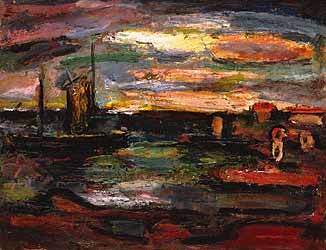
Rouault landscape.

Some of Rouaults works like his King David painting were said to have been worked on over a period of 50 years. The textures and colors, scrapes and pulls of the paint are the material of his contemplation of life as he experienced it. One just needs to stand in front of His paintings to see layer after layer built up until some portions of the painting will rise above the surface of the canvas an inch or so.


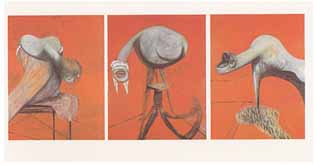
Francis Bacon 'Crucifixion'

Here is a Francis Bacon trip tic I saw in England. It is a horrific painting. One only needs to remember that he was contemplating the state of humanity post World War 2. Maybe it is horrific but accurate as well and therefore helpful.


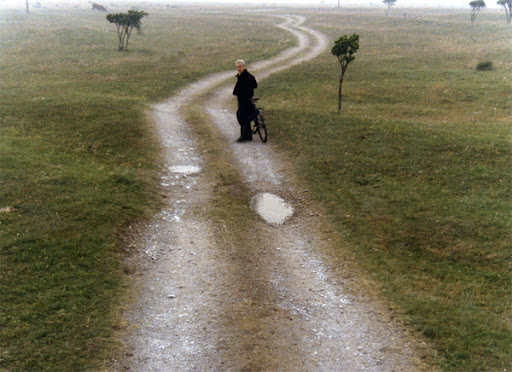
This is a shot from the Andrei Tarkovsky film 'The Sacrifice'

Andrei Tarkovsky the Russian film maker used slow choreographed takes so that he could cut the film as rarely as possible. In doing this he reflects the time of human experience. There is a sense of space and breath. Watching his films is like crawling into the skin of a monk for a couple hours and seeing the world through the eyes of a contemplative. Tarkovsky teaches us contemplation as he offers us his sense of time and composition in the film.


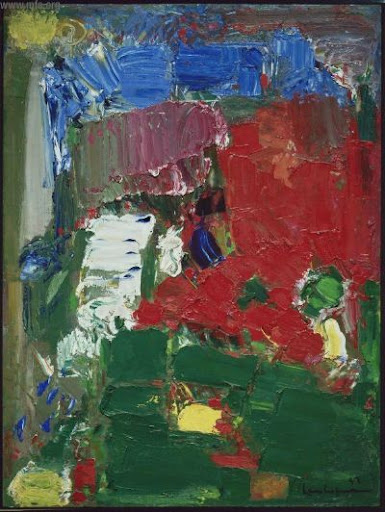
Hans Hoffman

Hans Hoffman paintings demonstrate an incredible beauty, specifically diversity in unity. In any image abstract or narrative which brings together any diversity into unity is a symbol of the Holy Trinity. It gives you a visual 'proof' of the real possibility of unity in diversity. Anything beautiful in this sense is an icon of the Holy Trinity. More than many other abstract expressionist painters Hoffman has a sense of the spiritual transcendent radiating from his work.


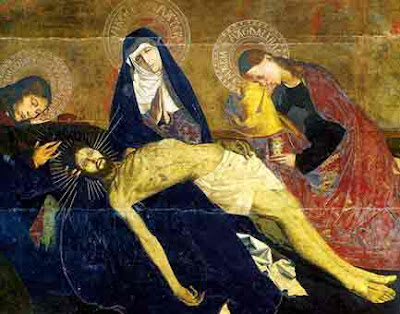
In this pieta the visual curving form of the body becomes a theological aesthetic way to deal with grace. Visual grace participates in the truth of redemptive theological experiential grace. The form of the art is created to contemplate and aid in the contemplation of the spiritual realities depicted.


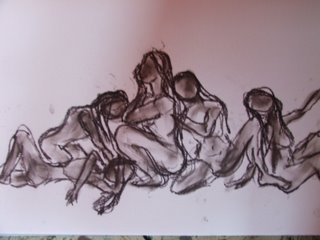
charcoal drawings by Sarah Lanse


Similarly Sarah has used here the process of charcoal drawing to contemplate her experiences of the suffering of the women she is working with. There is a real black and white, death and life severity to the drawings. Calcutta is far from a black and white place visually but certainly life and death are most present to the senses than in many other more insulated places in the world.

Micheal Nye is a great contemporary photographer who incorporates audio stories of persons being photographed. He has a show on living with mental illness with beautiful insightful photos of people he collaborated with and their accounts of how they experience life. It is startlingly personal and intimate. His process of photographing and audio interviewing is a great way of being attentive to another person, humanizing then, and discovering their unique story. When we spend time contemplating the individual lives of the poor in dignifying ways we find empathy and common humanity with the poor.

Art for contemplation is also a means of gaining insight, understanding and building empathy.

Here are some ideas to consider...

  • Journaling- high attention to what happened (or what is happening) without controlling the outcome of the reflection.
  • Drawing- simply sitting down and drawing from life can be a great way to hear God speaking through the tree, river, or the person drawn.
  • Open ended Drawing, painting, writing. (ex. Creating a set of characters with personalities etc, and then letting their personalities decides the outcome of the story)
  • writing poetry- Josh Fowler some public, some private reflection.
  • Video editing- bringing together themes in audio and video material. Reflecting on the content of the pieces and finding the connections between the parts. The stuggle with video or other digital media seems to be that the process can be so quick there is no space for contemplation. It takes discipline and patience to give the though and attention to create pieces which are going to also draw others into contemplation.
Click here for more examples of 'Art for Contemplation'

Contemplation should start in awe and play so that the good seeds of contemplation may be nurtured and grow in order to offer us their life giving songs. Without this deep saturation in contemplative experience of creation our art has little chance of transcending personal opinion and wishful thinking.
  • In 'Art for Contemplation' we are ‘gathering’ together the theological truths as they express themselves in creation, in all its processes, shapes, and colors. Contemplation is a focused way that faith and experience are integrated.

Tuesday, December 11, 2007

Beauty and Worship: Introduction, part 1


I have debated about how post some of the materials from a talk I gave the the Word Made Flesh staff in the summer of 2007. The workshop included staff from the many different Word Made Flesh Fields, a few have formal art training but most just seemed curious about finding and sharing ways that art may be a part of our lives seeking Christ among the worlds poor. I will try to cover the basic material in a series of blog posts. So here is the "Introduction to Beauty and Worship"...


Introduction to "Beauty and Worship Workshop"


1.Working Definitions for "Beauty" and of "Worship"


I am not a theologian primarily but an artist. I do believe in relying on the wisdom of great theologians, so I hope that my best guesses are informed ones.


Beauty = Diversity in Unity

Maximum Beauty = Maximum diversity in Unity

Worship = Gathering and offering back to God a transfigured creation


These are obviously short and over simplified definitions, so lets look into Chutnification to clear up some other issues before we start...


2. Chutnification and Aesthetic experience

“What is required for chutnification? Raw materials, obviously—fruit, vegetables, fish, vinegar, spices. Daily visits from Koli women with their saris hitched up between their legs. Cucumbers aubergines mint. But also: eyes, blue as ice, which are undeceived by the superficial blandishments of fruit-- which can see corruption beneath citris-skin; fingers which, with feathriest touch, can probe the secret inconstant hearts of green tomatoes; and above all a nose capable of discerning the hidden languages of what-must-be-pickled, its humors and messages and emotions. . . at Bragzana Pickles, I supervise the production of Mary's legendary recipes; but there are also my special blends, in which thanks to the powers of my drained nasal passages, I am able to include memories, dreams, ideas, so that once they enter mass-production all who consume them will know what pepperpots achieved in Pakistan, or how it felt to be in the Sundarbans. . . believe don't believe but its true. Thirty jars stand upon a shelf, waiting to be unleashed upon the amnesiac nation”. –Salman Rushdie, Midnight's Children p530

What we find here in the genius of Salmon Rushdie's novel is a great example of the role of the work of art in social life, of gathering and offering back something transformed, and possibly even of worship itself as I conceive of it.


Gathering Raw Materials(fruit, vegetables, fish, vinegar, spices)

+ Focused attention (eyes/nose)

= empathy/insight/compassion( ‘how it felt to be’)

& a sense identity/vision (‘amnesiac nation’, collective memory)


3.The unexperienced experience...


It is often not until we journal that we realize the significance of the events. We are gathering the 'raw materials' of our day and adding focused attention. It is often not until we talk with some one about an experience that we realize its full significance. Again, the dialogue happening with another person is the result of collecting experiences within ourselves, sorting them, reframing them into a new form and making coherent conversation with them. We only then become aware often of the significance of the experience.


We only really experience our experience by processing it. We need a pickle processing plant! To process all the ingredients of our life and to integrate them into a meaningful whole. By ‘pickling it’ the experience changes into a form that transcends time, and can nourish us whenever we have need.


People spend 2-3 seconds per painting at an art museum. By never processing a painting with great concentrated attention, and by not suspending judgment in order to understand the work on its own terms, we manage to pass by hundreds of works of art without ever really experiencing a single one!


In a figure drawing session during college my Prof played Arvo Part’s Te Deum. At the end of the thirty minute piece he and one of the student were crying? I was unaffected at the time. How did I not have the same experience of the piece as they did? I was jealous of whatever it was they heard. There are ways we can prepare ourselves to be able to experience more fully art as well as life itself.


This is what happens on a broader scale when we never take time to reflect, contemplate, pause, to be present in the moment or to reflect on the days experience. We pass through life really experiencing very little. This is possibly scandalous for those claiming to possess passionate love for the Creator of the planet and all the life it possesses.


4.How aesthetic experience works...


It is also important to recognize how aesthetic experience works. This is generalized and applies to approaching a work of literature, a painting, or the beauty of a person. The elements are the same.


letting go (of control of the experience)

+ concentrated attention

=Aesthetic Experience (contemplative experience)


The process of experiencing a work of art and the process of creating a meaningful work of art use the same processes. To create a great jar of pickled chutney and to be able to enjoy it both involve this same gathering and focused surrendered attention.


5.Missing pieces...


It seems clear that much of the world has the absence of consciousness of the plight of the poor. We live as if poverty does not exist, ‘the experience of suffering destitute poor’ is not experienced.


I want to give a wide range of ideas or ways we can engage life, ‘suck the marrow out of life’ as Henry David Thoreau said, really experience life among the poor, survive it, and find the Kingdom of God among the poor.


6.Conclusion

  • We need to learn the process of chutnification, of taking the raw materials of our life, our experience among the poor, and of the beauty of the world and offering them back, food for our amnesic selves and our amnesic world.

we need to see that...

  • Beauty is gathering together many parts into a meaningful whole.

and that...

  • Worship is the uniquely Christian act of gathering in symbolic ways all of creation into a meaningful whole and offering it back to God.


In the future posts I will build on this foundation into...
  1. Art for Play (or Awe)
  2. Art for Contemplation
  3. Art for Therapy
  4. Art for Community
  5. Art for Advocacy

Wednesday, December 13, 2006


The Role of the Artist:
Physical Play/Contemplation, Theological Insight, and Integration


The roles of the artist must deal with attentive observation. Apprehension of reality through time and work on physical objects in the physical world. It’s modes range from play and quiet contemplation. Play, the joyful discovery and interaction with the wonders of a miraculous creation, is one end of the same attentive observation, and quiet contemplation is the other. In its quiet contemplative mode it shares at its core, a joyful pilgrimage in the vast wonders of the physical universe. Joy is inherent as one is surprised by the beauty in every corner of the physical universe, one must only look long enough. This is true even in the most God forsaken places on earth. Without play and contemplation and art is always shallow, cliché, or an ugly slave and object of some totalitarian alien domain.

The next role is to be a participant in a similar playful and joyful journey into the universe through living theology, the present experience of the church as it is rooted in the historical and living Church. Written theology often opens doors to more fully experiencing God in the church, but theology in this sense is at its core a continuous journey, which is always renouncing false images of God and of the universe, grasping for the true God who reveals himself, but is always bigger than our comprehension.

The third role of the artist is the integration of the first two ever deepening discoveries (joyful explorations of material world through the senses and the joyful exploration of God through intuition and experience of living theology of the church. As these parts remain separate then the artist has contributed little to his communities, local and world. His power, responsibility to himself, to God, and to the world is to offer a synthesized, integrated image of the universe which seamlessly and organically (experiences the whole) ‘images’ a universe without separations, spiritual and physical, body and soul, idea and concrete reality, word and flesh. In the end the artist has done us a service when he has offered back to us the vision of the new heaven and earth where there is no division, separation, or warring parts. All is unified in the apocalyptic Christ Triumphant.

Without playful discovery of the material world the artists’ universe remains disconnected parts offering little hope of their ultimate reconciliation.

Without joyful pilgrimage into living theology, prayer and experience of God in the church, ones art remains abstract and offers little hope that it can ever touch the physical degradation of the world, the poor, or the earth.

Without integration, our play and contemplation remain undeveloped seedlings unable to provide shade or greater nourishment for the world. Though all artistic play, contemplation, and theological study have worth in itself it is their integration that needs to be developed if our work is to outlive us.