Showing posts with label art for advocacy. Show all posts

Wednesday, October 01, 2008


The kids at the Word Made Flesh Romania 'Valley Center' worked hard this year painting pictures to create a set of Christmas cards to sell to raise money for all the different activities that happen here. This little painting of a tree was done by one of my favorite kids. He sat down and did a group of paintings mixing color and brushing the paper like it was the most natural thing he could do. If you spent some time with this young man you would never guess the war he faces each evening when he goes home. His smile and handshake are all it takes to remind me that he is a hero of peace in our world and a sign that miracles happen in our broken work.

Click here for details on purchasing our 2008 Christmas Cards.

Friday, September 19, 2008


"Just now, even more than before the war, I feel the need to be in the cities among my fellow men. This is where our place is. We must take part in the whole misery that is to come. We must surrender our heart and nerves to the dreadfull screems or pain of the poor dissillusioned people...our superflous, self-filled existance can now be motivated only by giving our fellow men a picture of their fate and this can be done only if you love them." --Max Beckmann p32

from the book Max Beckmann by De Peter Howard Selz, Max Beckmann, Harold Joachim, Perry Townsend Rathbone

Saturday, May 24, 2008


Here is a sketchbook page I did while watching the kids making art. Below is a blog entry of Chris Heuertz the Word Made Flesh International director... he has a new book out called, Simple Spirituality: Learning to See God in a Broken World

Rabia of Basra

Last month Liz was carrying around this pretty red book. At some point, her and Phileena popped that thing open and the next thing I knew, I was the proud co-owner of a copy of Love Poems From God: Twelve Voices from the East and the West.

Since then Phileena had been savoring the pages and referencing the poems. On more than one occasion Phileena has shared verses from Rabia of Basra or Rabi’a al-Adawiyya al-Qaysiyy.

Rabia’s tale is one of the most heart-breaking and compelling stories I’ve heard in a long, long time.

Rabia lived during the 8th century in ancient Iraq. She was the youngest of 4 daughters in a very poor, but respectable family. As a young girl her father died, and eventually Rabia was not only separated from her parents but her sisters as well.

She was left wandering and vulnerable.

Known to possess captivating beauty, some biographers tell that Rabia was captured and sold at a considerably high price as a slave to one of the most famous brothels of her day. There she was imprisoned until she was nearly 50 years old.

Reflecting on the torment of her sexual slavery she wrote,

“What a place for trials and transformation did my Lover put me, but never once did He look upon me as if I were impure. Dear sisters, all we do in this world, whatever happens, is bringing us closer to God.”
Her poems are simple, her prayers moving, her life recognized as a saint in the Sufi tradition. Rabia spent her life suffering as a contemplative mystic, faithful to her faith through the exploitation of her sexuality.In the introduction to her section of poems in the book, the translator Daniel Ladinsky concludes with this quote from her writings,
“Show me where it hurts, God said, and every cell in my body burst into tears before His tender eyes. He has repaid me though for all my suffering in a way I never wanted: The sun is now in homage to my face, because it knows I have seen God. But that was not His payment. The soul cannot describe His gift. I just spoke about the sun like that because I like beautiful words, and because it’s true: Creation is in homage to use.”

Wednesday, February 27, 2008

Beauty and Worship, Art for Advocacy, part 6

I would like to talk about Advocacy as prophecy, 'as giving voice to the true under workings of the empire' as Walter Bruggemann might describe it. The story of David and Nathan the prophet show us how ‘story’/art can reframe life and give us an opportunity for personal insight and repentance. In a recent story I read a spiritual director was speaking with an eager young monk. The young monk was ready to receive his spiritual work assignment to help catapult him towards intimacy and union with God. his Spiritual director oddly asked the young monk to read Charles Dickens, David Copperfield. When the young monk complained of such a worldly assignment the spiritual director said that this young monk needed to learn empathy for normal people in normal life before he could journey into the depths of God.

Much of art is there to help us develop a basic empathy for our fellow human beings. When we sit in the others shoes for 200 pages we see the world different. I believe this is the heart of advocacy. No tricks, manipulation, no arm twisting, just getting to know people we usually are separated from through the mediums of art.
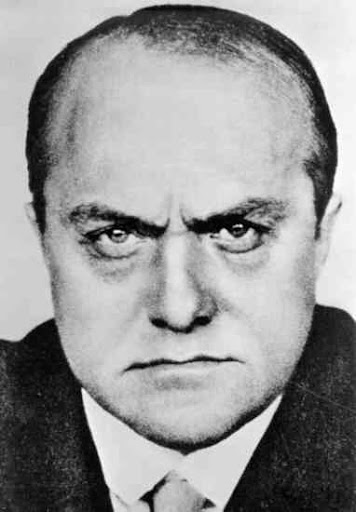

Meet Max Beckman. His painting exposed the Nazi oppression and got him exiled from Germany.
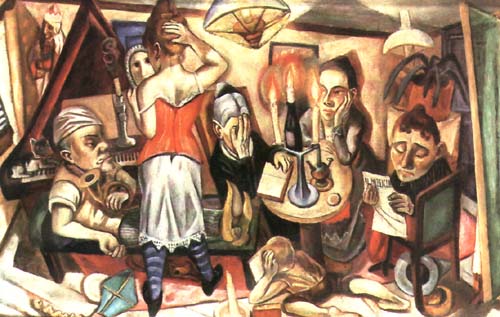
Max Beckman
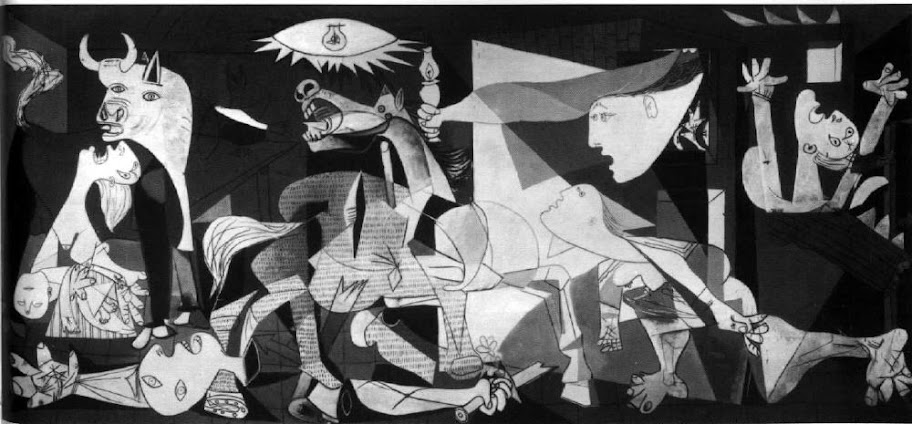

Guiernica, Picasso


Picasso put the city of Guiernica on the map with this devastatingly real depiction of the bombing of that city.
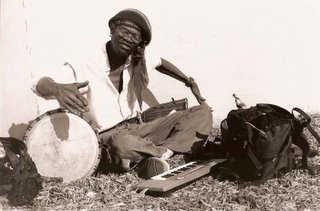
This is a photograph by Seth Allgire.
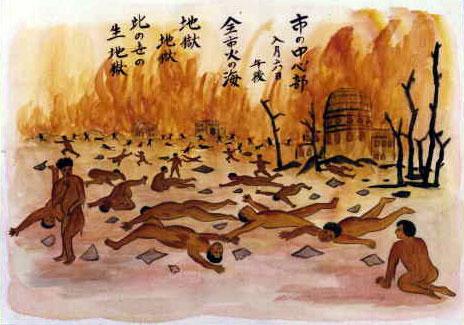
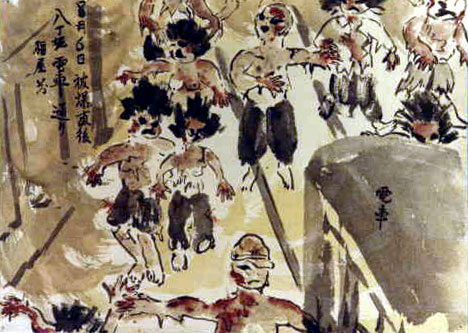
These are drawings done by survivors of Hiroshima. This is a great example of letting the victims tell their own story.

“…behind that frightened practice is a symbol gap in which we do not have symbols that are deep or strong enough to match the terror of the reality. What takes place when symbols are inadequate and things may not be brought to public expression is that the experience will not be experienced…’ p48 from The Prophetic Imagination

In the The National Story Project, we see a similar kind of amplifying of voices. This project gives air time to voices that would not ordinarily be heard. I am such there are many similar projects which could be designed to amplify voices of those we work among.
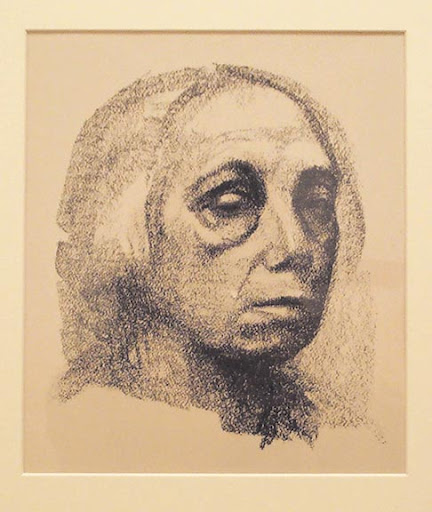

Kathe Kollwitz is another example of illuminating the jewish plight under the Nazi’s. She was a German lady who used wood block printing to print massive amount of pictures showing what was happening to the Jews. Her work is simple and stunningly human.

A more recent example of this kind of global advocacy is Francisco Botero's Abu Ghraib Paintings exposing the horrors of torture in US prison camps. He is giving voice to people who literacy have no advocate...no lawyer.

Kids with Cameras and our Sierra Leone fields, Beauty and Brokenness project in Sierra Leonne again put the cameras into the hands of the kids, letting us see through there eyes.
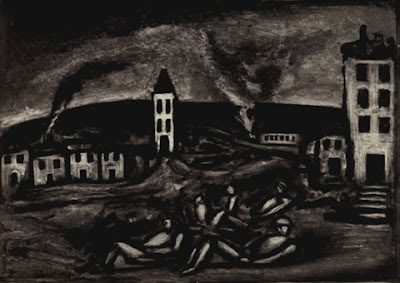

Georges Rouault, from the Miserere Series
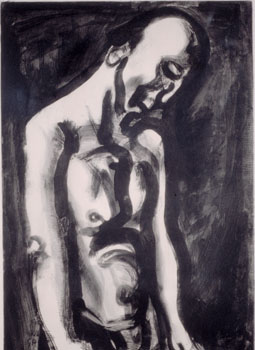
Georges Rouault, from the Miserere Series

By allowing people to see the poor through a humanizing lens, a different angle, stories, songs, pictures, images which give names, face, personality, connect their humanity to ours and evokes a response to their dignity. We certainly do not need to be a Picasso or a Kollwitz to be used in such a way. If the process only helps the artist herself to w in empathy for her brother or sister it is worth all the time and attention given.

True Notebooks, by Mark Salzman gives an inside look at an Orange County Juvenile Detention Center. He combines his own writing describing his experience of teaching writting there as well as he writing of the kids. This is a nice combination of letting the kids speak for themselves and the writer giving voice to the subtleties of their lives.


This was the collaborative animation done with the kids at the Valley center. The hope was to show their beauty and personality. Let them read themselves some of their ideas and dreams.


We can think of advocacy terms of gathering the voices and songs of the poor, of all people. Here is its connection to worship. We gather them from the margins and as Christ does, we place the poor in the center with Him.

If our art starts and finishes in Advocacy, I am afraid it will be shallow and not do justice to the beauty of the world. I believe advocacy needs to be the last and almost unconscious byproduct of art for play and awe, of contemplative art, of art building and expressing the lives of our communities, and art for therapy which is helping us plumb the depths of our inner worlds. Advocacy needs to come out of a deep and long look at the world in all its horrors and beauties. And hopefully our advocacy in the end will be a celebration of isolated people coming together and seeing each other for the first time as fully human, beautiful, and created in the image of God.


'Beauty and Worship' Concluding thoughts…

Here are a couple considerations for worship music.

worship music = music+poetry+theology


If our worship is a sacrifice...we should consider studying the greatest music, the best theology we are aware of, and reading and understanding poetry. Most people complain about mediocre worship music. I don't see many considering higher level theological training, musical training, and poetry studies. It might help?

If worship is about the gathering of creation (into microcosm ourselves and community) and offering it back to God, liturgy ie the work of the people

Then the more we gather the more attentively we gather the scattered parts, voices, tonalities, rythmes, theological prayer experiences, etc, the more rich and beautiful will be our offering.

Let us expose ourselves to great art and great suffering and great theology and integrate it through reflection in art activities


Ideas for collaborative work.


  • Short international films (each using birds eye lense, moving left to right)

  • Books/ story telling (on chosen themes try to generate poetry and prose around an idea like distance separation, dark, light) get a range of kids parents, audio video reflections?

  • Blogging our work (formatts

  • Music (worship, narrative, or experimental)

  • “Collections” –Sarah said she likes to collect strange things throughout Calcutta. What if we all tried to collect photograph and reflect on the collections?

  • A WMF Art exhibit, installations sounds, impressions, voices, images, videos.

  • Inventions and ‘merge si asa’ documentation, ingenious ways people solve basic life problems. (ie. Drill gun for grinding eggplant)

  • there are certainly many other ideas to be discovered.


Monday, February 25, 2008


This was created over a few months of learning about facial features, drawing and painting them together. Finally we put it all together and then made the sound track with the help of Ferenkeh Tarawally who has been visiting from from Sierra Leonne. He gave me a few Djimbe lessons while he was with us. The text was adapted from a piece written by David Chronic on working with children with varying degrees of attachment disorder.

(text read in animation)

The Face

baby puts everything in her mouth

ingesting her external environment

making it a part of herself.

a drawn face is moved

up and down in front of her

she smiles back.


the Face is the primal prototype

of religious experience

at around six months

the child becomes aware

that the face is not

constantly present.


the Face in whose Presence

each person was created

is that which constantly seeks us (Luke 19:10).

In His incarnation,

the Son has shown us

the Face of God.


"And all of us with unveiled faces,

seeing the glory of the Lord

as though reflected in a mirror,

are being transformed into the same image

from one degree of glory

to another; For it is God who said,


‘Let light shine out of darkness,’

who has shone in our hearts

to give the light of the knowledge

of the glory of God in the face of Christ.(2 Corinthians 3:17-18)

the Face that finds us and liberates us

will never leave or abandon us (Hebrews 13:5).


We no longer find identity

in opposition to others,

now identity is in relationship to the Son,

By responding, the Triune God becomes our primary attachment.

constant loneliness is dissolved in His Face

to whom we belong and correspond. (pause)


As community we come together as a sign

that our cosmic loneliness has found the constant presence of the Face.

As community, we invite people into the Spirit of God

to hear the affirmation of the Father,

and we together incarnate a “face” of consistency,

fidelity, love, and limits, finding together the Face of God.

Thursday, May 03, 2007

Adblock
Adblock
Adblock


I sat down in an empty parking lot. Three little boys, two were 4 and the other 8, approached me as I wrote in my journal and asked what I was writing. I evaded the question, handed them colored pencils and a 4x8 inch piece of paper to draw on together. I happened to had a good recording device with me and I hit record as it sat in my open bag away from their view. I later recorded the guitar track to go with the original voices of the boys. The video slowly fades into the drawing and back out to white. I saw the red haired four year old again yesterday playing on the streets around the fence of a condemned coliseum.

There are the trained marks of a fine artist on paper or canvas which can be beautiful and attuned to the subject and insightful. These authentic marks of little children have the simple beauty of the human person, our vitality, life, gentleness, and hope.

Thursday, March 15, 2007


The Deposition

“The police are giving us an apartment!" Are you coming or not?" Each of us hop into the police van and see the grinning cops joking with us. They usually swear at us and look at us like we are rats, but never are they happy to see us.

The city spins outside the van a few times and we pull up. "5th floor", we traipse up the stairs one after another. 'Who can bust in the door?" We all jump up and start pounding in the door. There are no sounds inside, just echoes of beating on the door. John falls in on his side on top of the mangled door and there she is.

In the kitchen lies an old woman. She must have been dead for a while now. The kitchen is moldy and smells like the bottom of a garbage can. The woman’s face is an old spotted bleached house shirt.

“The granddaughter was sent to the orphanage there is no one left to carry her out boys', Here is a bag, lets get her down to the van, we'll talk about the apartment later.


It is one of those houses, where there are no corners, only worn edges and solidified gum in every corner filling in until the home rounds till it looks like the underground tunnels we sleep in for now.


Dark, damp collections of clothes, shag strip on the bathroom floor, split toilet seat, scraps of wood, broken furniture, hear the echoes in the walls, neighbors gargling through the bathroom wall.

We all find places around the body and carry her over the broken door spiraling down together like the 'Lord’s Cow' bug with each of us as a leg.

We carry the black bag down the five flights of stairs and each of us knows what to do with death. Laugh in its face. (Except when we carried Mike out of the sewer last year after he got beat up and drank himself till he choked on his own vomit in the sewer, nobody looked at anybody, we all hated him anyway and you don’t want him haunting you just because you laughed). So we tell jokes the whole time, we joke that the body would ride nicely on the top of the van and we could aim and drop it down quite easily. The police are quiet for once, those two hate us and love us at the same time. We all know it.

We scuffle out the back of the van stopped at the morgue entrance at the back of the hospital. Placing her body on the hospital stretcher for a minute I remember my grandmother. Her smell, the way she always touched my ear and couldn't get me to eat enough. The way her bare feet looked in those jelly slippers in the summer. Blackened toe nails, And I thought of my mother, and hell, the last time I saw my dad, my brother fishing, and my mother. I feel that nameless black blob coming up my chest and say, 'so do we get to use the apartment or not?'

“We'll see what the mayors office works out and we'll let you know. I am not sure it will do any good, you'll still be back at the corner smearing your dirty rags on car windows pestering good people for change”


(a short story based an experience of the kids we meet with regularly on the streets)

art for therapy

Friday, November 10, 2006

Detail from 'The Storyteller'
Things Fall Apart by Chinua Achebe is a wonderful example of the genius in African Storytelling. As I relished the culturally rich language such as, "... the market was so crowded, that if you threw a grain of sand it would never hit the ground" A few days after finishing the book I listened to a discussion led by a new Word Made Flesh board member, a Ugandan Catholic priest, and presently teaching at Duke. He discribed briefly how we live in and out of stories. Often these stories are unconscous yet they inform our descision, our sense of who we are, and become a basis for building our lives.

Thursday, October 05, 2006

This is a trial run of a project with marginalized kids doodling in sand. There images appear and dissapear. I hope to make a longer smoother version as I work with these young kids more. I just took another 1000+ frames to work with. Where we live kids are told they have no talent early on. This is a very non threatening way for them to play with lines and shapes. Any ideas on a story line that could go along with these images? I am thinking of having the kids develope some ideas.

Tuesday, August 08, 2006


These are clips from a video animation project done in January 2006 with marginalized children at our day center in Romania. You hear their voices, see their eyes and ears and noses, but never see a whole face. My hope was that you would have an experience of their personality and character in a small way. The dancer in the video is one of the kids dancing, photographed with continuous shooting, turned into outlines, and then colored in by the kids. Another segment consists of drawings the kids did, starting with eyes and nostrils on a page. They completed the drawings as you see in the video... http://video.google.com/videoplay?docid=-2772529845494804139