Showing posts with label Beauty and Worship. Show all posts

Wednesday, February 27, 2008

Beauty and Worship, Art for Advocacy, part 6


I would like to talk about Advocacy as prophecy, 'as giving voice to the true under workings of the empire' as Walter Bruggemann might describe it. The story of David and Nathan the prophet show us how ‘story’/art can reframe life and give us an opportunity for personal insight and repentance. In a recent story I read a spiritual director was speaking with an eager young monk. The young monk was ready to receive his spiritual work assignment to help catapult him towards intimacy and union with God. his Spiritual director oddly asked the young monk to read Charles Dickens, David Copperfield. When the young monk complained of such a worldly assignment the spiritual director said that this young monk needed to learn empathy for normal people in normal life before he could journey into the depths of God.

Much of art is there to help us develop a basic empathy for our fellow human beings. When we sit in the others shoes for 200 pages we see the world different. I believe this is the heart of advocacy. No tricks, manipulation, no arm twisting, just getting to know people we usually are separated from through the mediums of art.
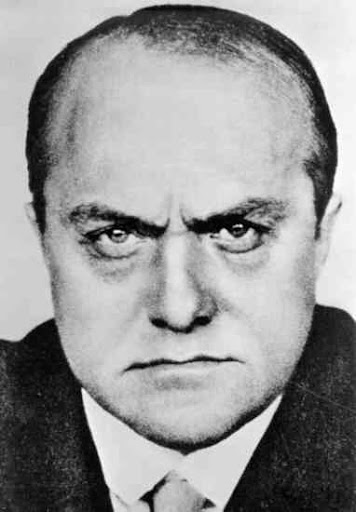

Meet Max Beckman. His painting exposed the Nazi oppression and got him exiled from Germany.
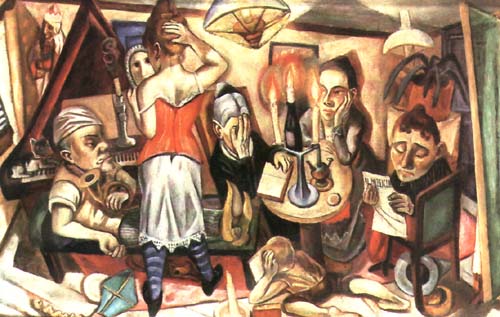
Max Beckman


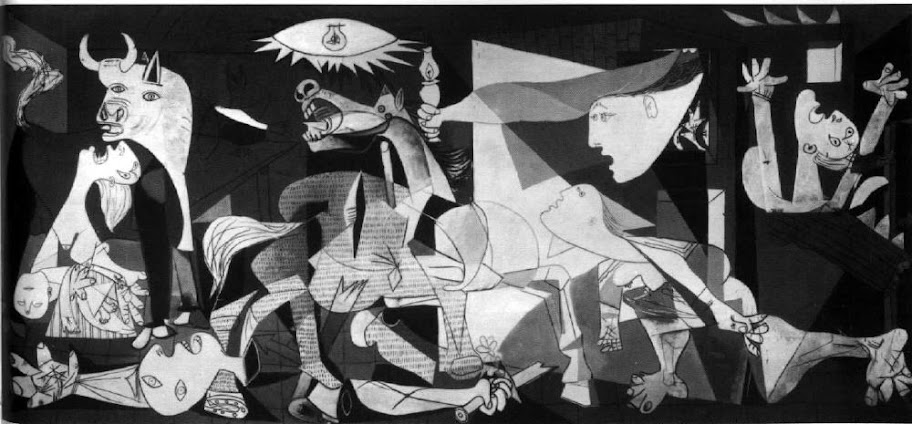
Guiernica, Picasso


Picasso put the city of Guiernica on the map with this devastatingly real depiction of the bombing of that city.
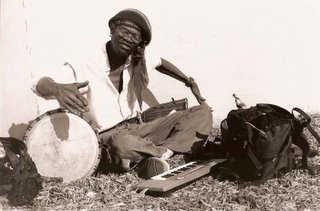
This is a photograph by Seth Allgire.
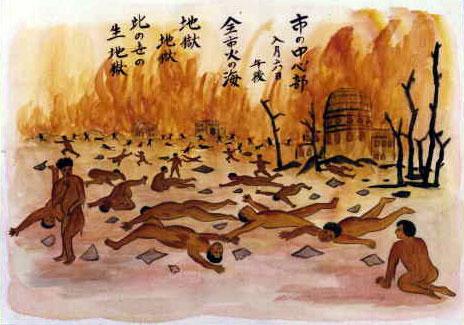
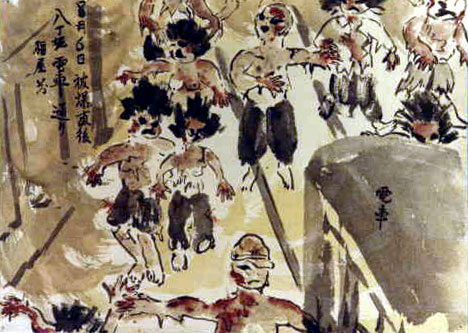
These are drawings done by survivors of Hiroshima. This is a great example of letting the victims tell their own story.

“…behind that frightened practice is a symbol gap in which we do not have symbols that are deep or strong enough to match the terror of the reality. What takes place when symbols are inadequate and things may not be brought to public expression is that the experience will not be experienced…’ p48 from The Prophetic Imagination

In the The National Story Project, we see a similar kind of amplifying of voices. This project gives air time to voices that would not ordinarily be heard. I am such there are many similar projects which could be designed to amplify voices of those we work among.
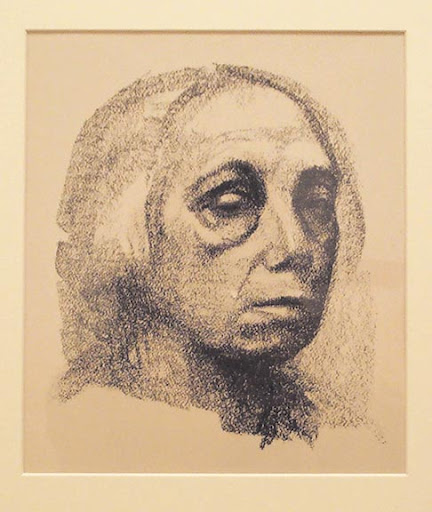

Kathe Kollwitz is another example of illuminating the jewish plight under the Nazi’s. She was a German lady who used wood block printing to print massive amount of pictures showing what was happening to the Jews. Her work is simple and stunningly human.

A more recent example of this kind of global advocacy is Francisco Botero's Abu Ghraib Paintings exposing the horrors of torture in US prison camps. He is giving voice to people who literacy have no advocate...no lawyer.

Kids with Cameras and our Sierra Leone fields, Beauty and Brokenness project in Sierra Leonne again put the cameras into the hands of the kids, letting us see through there eyes.
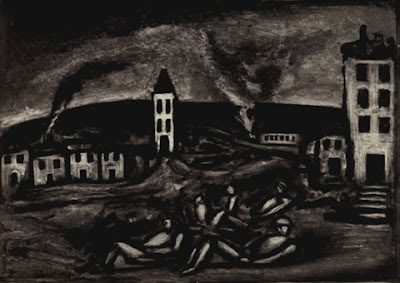

Georges Rouault, from the Miserere Series
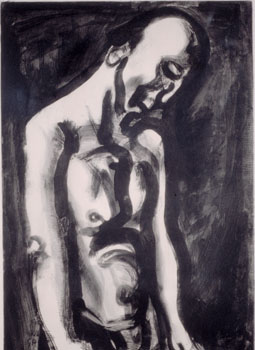
Georges Rouault, from the Miserere Series

By allowing people to see the poor through a humanizing lens, a different angle, stories, songs, pictures, images which give names, face, personality, connect their humanity to ours and evokes a response to their dignity. We certainly do not need to be a Picasso or a Kollwitz to be used in such a way. If the process only helps the artist herself to w in empathy for her brother or sister it is worth all the time and attention given.

True Notebooks, by Mark Salzman gives an inside look at an Orange County Juvenile Detention Center. He combines his own writing describing his experience of teaching writting there as well as he writing of the kids. This is a nice combination of letting the kids speak for themselves and the writer giving voice to the subtleties of their lives.


This was the collaborative animation done with the kids at the Valley center. The hope was to show their beauty and personality. Let them read themselves some of their ideas and dreams.


We can think of advocacy terms of gathering the voices and songs of the poor, of all people. Here is its connection to worship. We gather them from the margins and as Christ does, we place the poor in the center with Him.

If our art starts and finishes in Advocacy, I am afraid it will be shallow and not do justice to the beauty of the world. I believe advocacy needs to be the last and almost unconscious byproduct of art for play and awe, of contemplative art, of art building and expressing the lives of our communities, and art for therapy which is helping us plumb the depths of our inner worlds. Advocacy needs to come out of a deep and long look at the world in all its horrors and beauties. And hopefully our advocacy in the end will be a celebration of isolated people coming together and seeing each other for the first time as fully human, beautiful, and created in the image of God.


'Beauty and Worship' Concluding thoughts…

Here are a couple considerations for worship music.

worship music = music+poetry+theology


If our worship is a sacrifice...we should consider studying the greatest music, the best theology we are aware of, and reading and understanding poetry. Most people complain about mediocre worship music. I don't see many considering higher level theological training, musical training, and poetry studies. It might help?

If worship is about the gathering of creation (into microcosm ourselves and community) and offering it back to God, liturgy ie the work of the people

Then the more we gather the more attentively we gather the scattered parts, voices, tonalities, rythmes, theological prayer experiences, etc, the more rich and beautiful will be our offering.

Let us expose ourselves to great art and great suffering and great theology and integrate it through reflection in art activities


Ideas for collaborative work.


  • Short international films (each using birds eye lense, moving left to right)

  • Books/ story telling (on chosen themes try to generate poetry and prose around an idea like distance separation, dark, light) get a range of kids parents, audio video reflections?

  • Blogging our work (formatts

  • Music (worship, narrative, or experimental)

  • “Collections” –Sarah said she likes to collect strange things throughout Calcutta. What if we all tried to collect photograph and reflect on the collections?

  • A WMF Art exhibit, installations sounds, impressions, voices, images, videos.

  • Inventions and ‘merge si asa’ documentation, ingenious ways people solve basic life problems. (ie. Drill gun for grinding eggplant)

  • there are certainly many other ideas to be discovered.


Monday, February 11, 2008

Beauty and Worship: Art for Community, part 5


When art is based in Community, the artist vocalizes the community experience. The artist is able to give expression to more than just her own personal experience.

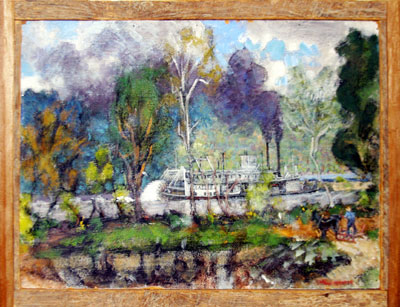
Thomas Hart Benton went from the Paris art scene, the cutting edge at the time, and from there developed a desire to connect and articulate common themes coming from common people in the southern United States.


As Thomas Hart Benton and others such as Harlan Hubbard described by Wendel Berry did, artists in local rooted communities have the opportunity of articulating directly our common themes, vision, identity, and experience. The gift they offer back to their communities is a sense of vision and purpose, a sense of their place in history and the importance of the ordinary loving work taking place in the community.

Collaboration

The Give and take, the dance of the Holy Trinity is our model and mandate to be collaborating partners in any work we do. We are made to work together. By making art together we make visible our common work together that is orchestrated by the Holy Spirit.

By doing collaborative work we are able to do a series of reflections, learn to give and take, and learn to risk. For people who have been trained in individualistic, competitive culture where each person must prove he is better that all the rest, this kind of collaboration can be healing. For children at risk who feel powerless and voiceless this kind of dignifying collaboration can be revitalizing and hope giving.


Kids animation Project


This project involved most of the kids at the center for at risk youth, The Valley Center. In it their own voices and personalities are heard, their mark is made. The process in itself of photographing, coloring, and drawing, and all the way until we watched the final product together was fun and life giving.

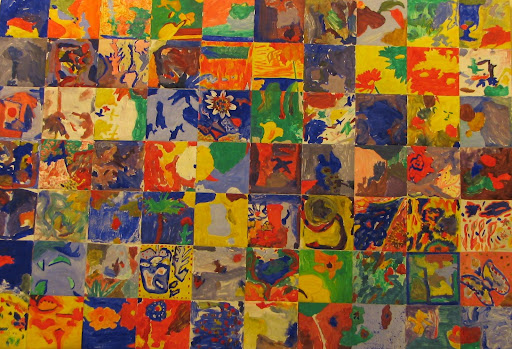
Flower garden Painting

For this collaboration I gave the kids squares with blind contours drawn on them and they were able to paint them how they wished. The funnest moment was seeing their faces light up when they saw the final collection of all the squares. They ran around finding the other staff telling them that they had made this piece together.


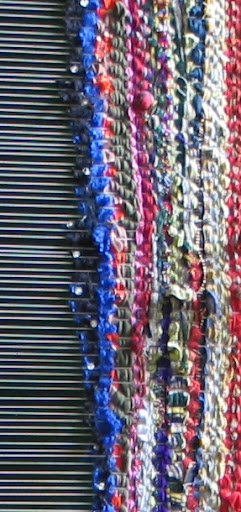
In the chapel carpet we have another example of collaboration. The other Word Made Flesh communities sent us articles of used clothing which intersected with their communities and we cut them into strips and have woven them into a rug to be used in the center of the chapel. We have used the process as a way to pray for the other fields, and now after a couple years of weaving in prayers, the rug is almost finished, and will be a reminder of the other communities present with us in our times of prayer.


Wendell Berry’s Short stories are a great example of using writing to find voice for the community experience. They are simple beautiful and dignifying to the loving, patient work of good people. More of this kind of reflective fiction could be cultivated among us. There are many amazing characters who we we meet on a daily basis whose lives deserve to be described and celebrated in reflective writing. Some of our stories which appear in prayer letters are great starts to reflective contemplative writing which gives voice to our common experience as communities.


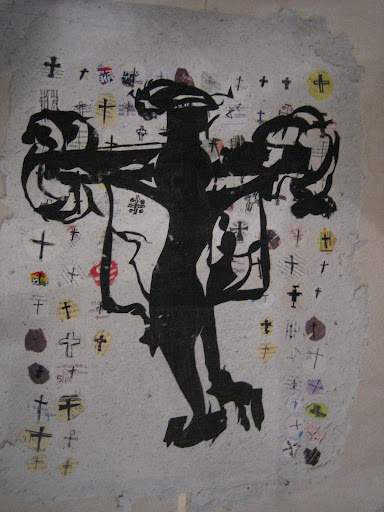
This is a piece of hand made paper which came together during a talk I gave called "Finding Joy in the Midst of Suffering" to the Beggars Society in Omaha. Again, the beauty of the piece is in the diversity of contributions, prayers, and the lives and suffering represented by each of the people who placed their crosses into the wet paper pulp.

In 'Art for Community' we find our voice, the community participates in collaborative projects which articulate common vision and purpose. We collaborate in a material way, making visible signs of our collaborative and redemptive work among the poor. When we work together, in mutual submission and love we become living icons of the Holy Trinity.

Find more examples of 'Art for Community'


Thursday, January 24, 2008

Beauty and Worship: Art for Therapy, part 4


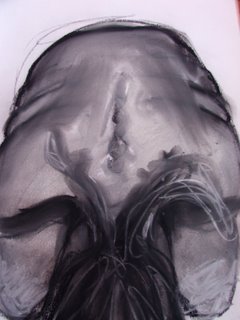
Sarah Lanse charcoal drawing


Paradigm of bringing things from darkness to light

Sarah’s drawing is an image of the contemplative process of illuminated darkness, re written pages, and of excavating roots. All themes that have come up as we have discussed 'The Human Condition' by Thomas Keating

'Gathering' is bringing together the parts missing in darkness. In 'art for play' or 'awe' it is bringing together the materials that are left unnoticed, in 'art for contemplation the truths, the beauty, making connections, and now in art for therapy, it is gathering our lost and forgotten roots, our inner emotional basements, re framing, rewriting them into the rest of who we are so that we are not split and fragmented people. If we perpetuate a false self, a fragmented person, we only add to the fragmentation of or world.


This dis integration can happen easily in otherwise healthy people when exposed to the harsh suffering of the worlds poor wherever in the world. Counselors working with child abuse victims are often required to receive 4 hours a week of counseling do deal with their own secondary trauma caused by listening to the stories of abused children. When working among the poor the stories we are hearing on a regular basis are no less traumatic. The injustices suffered by the children we are serving among will over a short time plunge us into compassion fatigue. No one is immune. In order to survive for the long term one needs to take definitive steps to reflect and process this secondary trauma, that of hearing of the traumas of others.

Self-assessment for compassion fatigue

Answering "yes" or "no" to the following nine statements will help you assess your risk for compassion fatigue:

Personal concerns commonly intrude on my professional role.

Yes

No

My colleagues seem to lack understanding.

Yes

No

I find even small changes enormously draining.

Yes

No

I can't seem to recover quickly after association with trauma.

Yes

No

Association with trauma affects me very deeply.

Yes

No

My patients' stress affects me deeply.

Yes

No

I have lost my sense of hopefulness.

Yes

No

I feel vulnerable all the time.

Yes

No

I feel overwhelmed by unfinished personal business.

Yes

No

Answering "yes" to four or more questions may indicate that you're suffering from compassion

fatigue. [This instrument, developed by the authors, has not been validated, but the results should serve as a quick check of your state of mind.] If you're interested in determining your risk for burnout, try taking the Maslach Burnout Inventory. It may be obtained through the Consulting Psychologists Press at 800-624-1765 or through their Web site at www.cpp-db.com.

­­­­­­­­­­­­­­­­­­

  • Much of our coping and integrating of traumatic situations and stories comes from learning to be attentive and attuned to our inner world. It allows us to get to the point where we ask ourselves, ‘how is ‘x’ situation affecting me?

  • It is getting this nagging abstract feeling out somehow. Naming the feeling steals its power over us.

  • Lung process, heart process, and digestion give us paradigms of gathering in, processing, and letting go/ releasing. We can only process so much at a time. Increased traumatic/ difficult experience necessitates increased time to process, and integrate the experiences into our selves.

Here are some ideas of how Art as therapy can help us move towards habits of processing our experiences in service among the poor.

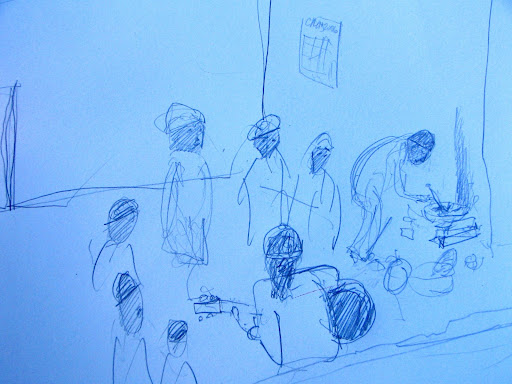
This is an example of my own sketched memories from an evening on the streets with the boys. This non verbal processing method is direct and immediately externalizes an experience that can eat away at you without you realizing it. Journaling after such street meetings or anything else that is potentially traumatic is an intentional way to precess and externalize the experience of another's suffering. It does not solve the injustice by takes steps towards integrating it into you understanding of God and the world.

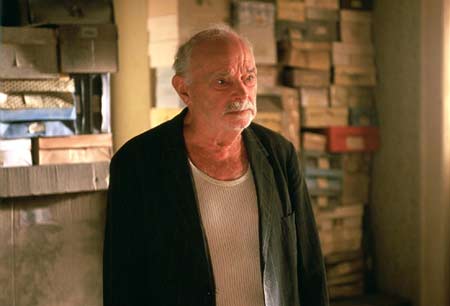
still from the movie 'Everything is illuminated'

Holocaust films help reintegrate, finding some meaning in the insanity, and learning to live on with the loss or horror. The image of boxes of the remaining possessions of each victim is a metaphor for our built up unnamed traumas. They have a certain silent power over us if they are unopened and un integrated, and often we are oblivious to them all the way until we burn out and leave our place of service.

Our art teacher at the Valley Center Nina did a project with the boys living on hte streets with collected pieces of wood and interesting branches. The boys spent most of their time cutting cleaning and carving out of the branches they selected from the pile. When they were finished they were asked to give a name to their sculpture. In the process of naming this abstract form many came up with revealing ideas. One sculpture was a cut off small tree with the large roots exposed. It was cleaned and put upside down and gashed were cut about an inch apart up the length of the tree. In the end he named the piece, 'the sad tree'. The tree perfectly mirrored the boys arms which have the gashes form self mutilation. He was able to name the sadness in himself in a non threatening way. Darkness turns to light, unnamed feelings are named and
rendered less powerful.

Often journaling about counseling with kids or about a traumatic story told to us can get us steps closer to understanding how we are being affected.


In comparison to the suffering of the person we care about it is easy to discount this secondary suffering we feel. It is true that we cannot compare the first hand trauma and the second hand trauma, but the affects on our continued functioning are the same over time though less extreme. For this reason we have to be willing to deal with how ministry is affecting us as workers, it is important because our ability to love the least among us depends on it.

Within a few years of coming to Romania a little boy named Mihaita was hit by a car and killed. This painting was part of my own processing the trauma I had of being asked to photograph the funeral proceedings from stat to finish. It was like having my nose pushed into this injustice. The pain I felt seemed so trivial next to the memory of the boys mother screaming. I have not forgotten this boys face but I am no longer debilitated by the unnamed emotional pain. It is re written into my story my history and my faith.

  • In 'Art for Therapy' we are talking about gathering the boxes of our dark closets, ‘basements’, ‘excavating roots’, ‘allowing old pages to be re-written’ so we can be fully present as a whole integrated persons.

See more examples of 'Art for Therapy'

Thursday, January 10, 2008

Beauty and Worship: Art for Contemplation, part 3


In 'Art for Contemplation' I am thinking of active reflection using a medium (words, colors, shapes, film, clay, etc) giving a high level of attention while releasing control of the outcome of the reflection. In the paradigm of Friere's, Pedagogy of the Oppressed, this would be a way of reflecting on our action or 'Praxis'.

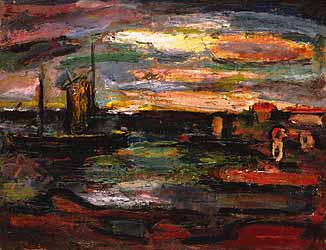
Rouault landscape.

Some of Rouaults works like his King David painting were said to have been worked on over a period of 50 years. The textures and colors, scrapes and pulls of the paint are the material of his contemplation of life as he experienced it. One just needs to stand in front of His paintings to see layer after layer built up until some portions of the painting will rise above the surface of the canvas an inch or so.


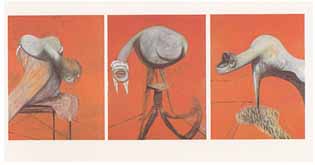
Francis Bacon 'Crucifixion'

Here is a Francis Bacon trip tic I saw in England. It is a horrific painting. One only needs to remember that he was contemplating the state of humanity post World War 2. Maybe it is horrific but accurate as well and therefore helpful.


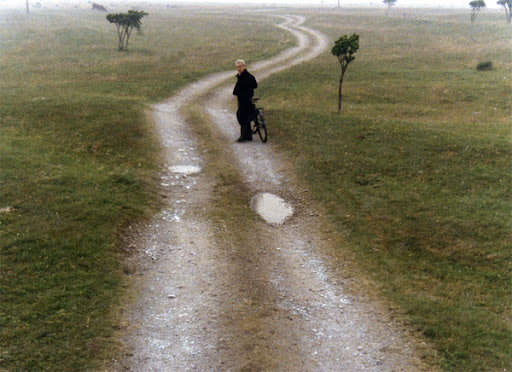
This is a shot from the Andrei Tarkovsky film 'The Sacrifice'

Andrei Tarkovsky the Russian film maker used slow choreographed takes so that he could cut the film as rarely as possible. In doing this he reflects the time of human experience. There is a sense of space and breath. Watching his films is like crawling into the skin of a monk for a couple hours and seeing the world through the eyes of a contemplative. Tarkovsky teaches us contemplation as he offers us his sense of time and composition in the film.


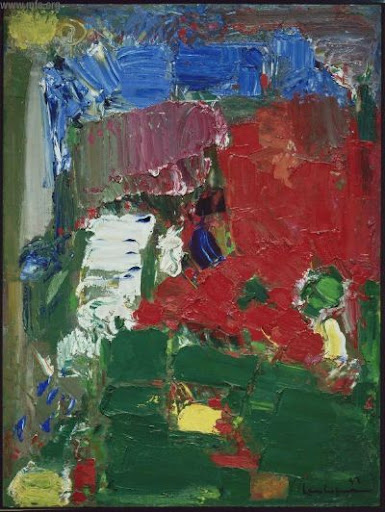
Hans Hoffman

Hans Hoffman paintings demonstrate an incredible beauty, specifically diversity in unity. In any image abstract or narrative which brings together any diversity into unity is a symbol of the Holy Trinity. It gives you a visual 'proof' of the real possibility of unity in diversity. Anything beautiful in this sense is an icon of the Holy Trinity. More than many other abstract expressionist painters Hoffman has a sense of the spiritual transcendent radiating from his work.


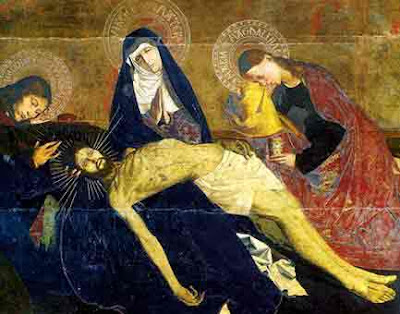
In this pieta the visual curving form of the body becomes a theological aesthetic way to deal with grace. Visual grace participates in the truth of redemptive theological experiential grace. The form of the art is created to contemplate and aid in the contemplation of the spiritual realities depicted.


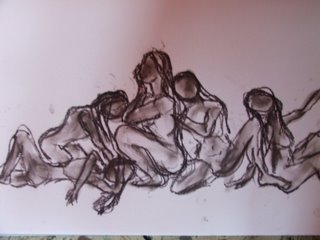
charcoal drawings by Sarah Lanse


Similarly Sarah has used here the process of charcoal drawing to contemplate her experiences of the suffering of the women she is working with. There is a real black and white, death and life severity to the drawings. Calcutta is far from a black and white place visually but certainly life and death are most present to the senses than in many other more insulated places in the world.

Micheal Nye is a great contemporary photographer who incorporates audio stories of persons being photographed. He has a show on living with mental illness with beautiful insightful photos of people he collaborated with and their accounts of how they experience life. It is startlingly personal and intimate. His process of photographing and audio interviewing is a great way of being attentive to another person, humanizing then, and discovering their unique story. When we spend time contemplating the individual lives of the poor in dignifying ways we find empathy and common humanity with the poor.

Art for contemplation is also a means of gaining insight, understanding and building empathy.

Here are some ideas to consider...

  • Journaling- high attention to what happened (or what is happening) without controlling the outcome of the reflection.
  • Drawing- simply sitting down and drawing from life can be a great way to hear God speaking through the tree, river, or the person drawn.
  • Open ended Drawing, painting, writing. (ex. Creating a set of characters with personalities etc, and then letting their personalities decides the outcome of the story)
  • writing poetry- Josh Fowler some public, some private reflection.
  • Video editing- bringing together themes in audio and video material. Reflecting on the content of the pieces and finding the connections between the parts. The stuggle with video or other digital media seems to be that the process can be so quick there is no space for contemplation. It takes discipline and patience to give the though and attention to create pieces which are going to also draw others into contemplation.
Click here for more examples of 'Art for Contemplation'

Contemplation should start in awe and play so that the good seeds of contemplation may be nurtured and grow in order to offer us their life giving songs. Without this deep saturation in contemplative experience of creation our art has little chance of transcending personal opinion and wishful thinking.
  • In 'Art for Contemplation' we are ‘gathering’ together the theological truths as they express themselves in creation, in all its processes, shapes, and colors. Contemplation is a focused way that faith and experience are integrated.

Thursday, December 13, 2007

Beauty and Worship: Art for Play, part 2


Art for Play, Awe, and Wonder

We are talking about discovering, enjoying, uncovering, celebrating God’s creation, the beauty of the world.

'land of milk and honey'

“Now as Erich Fromm wrote in his meaningful book "The Art of Loving", the earth is always symbolized as a woman (mother earth) and according to the Old Testament, the Promised Land is the land of "Milk and Honey". Here Fromm says that any mother can feed her child with milk, a liquid that gives life and symbolizes the acceptance of life and growth but rarely, truly rarely can one find a mother who feeds her child with honey too, a substance so sweet that bequeaths love for life. What Fromm meant was that a true mother would give her child the ability to accept and then above all to love life.

'Art for play' or 'Art for awe/wonder' are ways of trying to talk about those forms of art making which are primarily about enjoying life and experiencing it more deeply. About getting in the mud and playing with the good materials of the world. The lost art of Alchemy was something like this, engaging in direct and joyful observation of how beautiful the colors, textures, and interactions of elements are. (See James Elkins book, 'What painting is' for a great discussion of the similarities of painting an alchemy.)


The mode of play and experimentation with the materials of creation give us the intimate knowledge necessary for all the other forms of art.


This was an old window frame set up like a table. I places sand in it and let the kids from the valley center draw in the sand while took continuous still images. The images were turned into this video. These 'Sand trap drawings' are an example of art for play. They are low risk and fun giving the kids a means of discovery, and feeling successful. The finished product is not the point as much as the simple pleasure of playing in the sand.


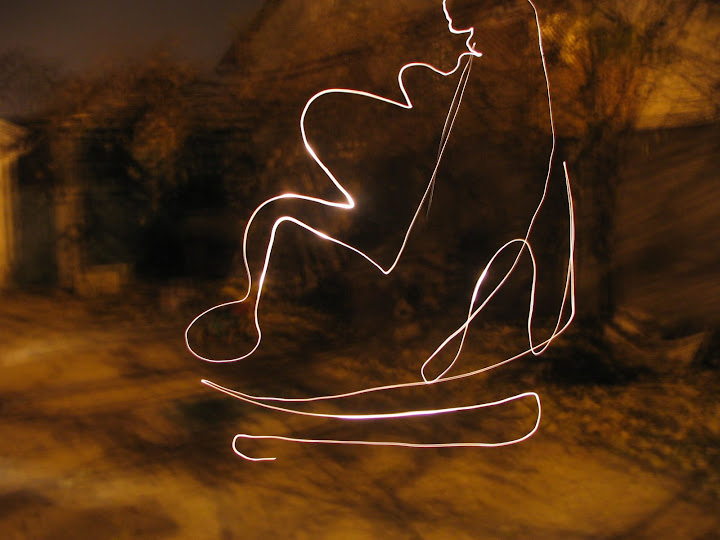
Picasso had a famous long exposure shot
where you see him drawing (from when the flash went off) and you see a bull drawn with a light (created during the long exposure in the dark). These are not original but a way of playing with light.

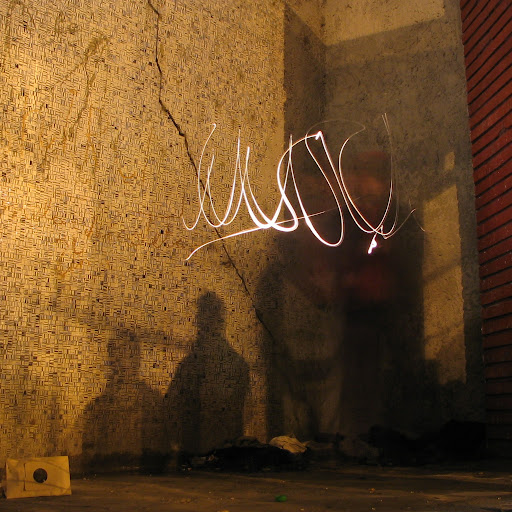
This one was done with the boys on the streets.


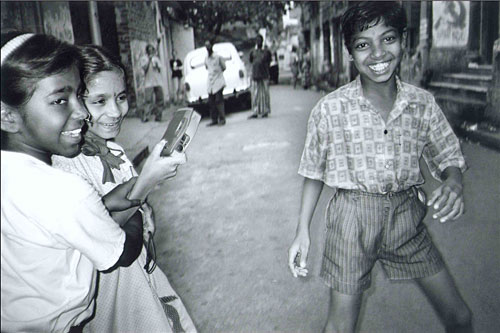
This is an image produced by 'KIDS with CAMERAS' Our Sierra Leone Beauty and Brokenness photos were another great example of giving the kids a chance to play and discover what happens when you take pictures. The results may turn into advocacy naturally but there is important reflection that is happening in the process of playing with a camera.


Here are more examples of 'Art for Play' that have appeared on this blog already. Another great example was Caleb Coppock and one of the boys from the boys home playing with the reflections of sunlight in CD’s. I found Ron playing with bubbles with the kids at the center. The question of when does play turn into art is a good question, but maybe we should just start with acknowledging that great art always starts in a celebration of materials, of discovery of textures and colors. Jackson Pollock is a straightforward example. Here are some other art for play examples...


I find the simple structure of the Hiku a liberating low key way to experiment with words and ideas.


Retreat Haiku May 2005


1

Leaflets jump for joy

When through the umbrella comes

Spattering wet joy


2

Grace curving through limb

Raising leaves high to the sun

Gentle bow his hymn


4

Frogs green jokers laugh,

Mountains water gathering

And wind make my bath


5

Straight backed noble grass

Tips its hat in river wind

Roaring green applause


Also, reflective journaling, brainstorming, writing about events of the day are great ways to dig into the raw materials of your life. Other ways to playing in the mud might be working in clay, paint, charcoal, carving, making noises, sounds. All the baby talk of infants is their way of finding their voice, figuring out what combinations of air flow and air stopping makes what kinds of sound. Without this experimentation it is difficult to learn to speak.

In Art for play we are gathering raw materials, learning to enjoy them, use them, delight in them. we play in the sand, clay, and mud learning their inner properties. It is necessary for any artist to 'baby talk', to play in the mud, to be an alchemist wondering at the beauty of the stuff of the world before she can find her voice and articulate a beautiful idea for the love of God and community.

Tuesday, December 11, 2007

Beauty and Worship: Introduction, part 1


I have debated about how post some of the materials from a talk I gave the the Word Made Flesh staff in the summer of 2007. The workshop included staff from the many different Word Made Flesh Fields, a few have formal art training but most just seemed curious about finding and sharing ways that art may be a part of our lives seeking Christ among the worlds poor. I will try to cover the basic material in a series of blog posts. So here is the "Introduction to Beauty and Worship"...


Introduction to "Beauty and Worship Workshop"


1.Working Definitions for "Beauty" and of "Worship"


I am not a theologian primarily but an artist. I do believe in relying on the wisdom of great theologians, so I hope that my best guesses are informed ones.


Beauty = Diversity in Unity

Maximum Beauty = Maximum diversity in Unity

Worship = Gathering and offering back to God a transfigured creation


These are obviously short and over simplified definitions, so lets look into Chutnification to clear up some other issues before we start...


2. Chutnification and Aesthetic experience

“What is required for chutnification? Raw materials, obviously—fruit, vegetables, fish, vinegar, spices. Daily visits from Koli women with their saris hitched up between their legs. Cucumbers aubergines mint. But also: eyes, blue as ice, which are undeceived by the superficial blandishments of fruit-- which can see corruption beneath citris-skin; fingers which, with feathriest touch, can probe the secret inconstant hearts of green tomatoes; and above all a nose capable of discerning the hidden languages of what-must-be-pickled, its humors and messages and emotions. . . at Bragzana Pickles, I supervise the production of Mary's legendary recipes; but there are also my special blends, in which thanks to the powers of my drained nasal passages, I am able to include memories, dreams, ideas, so that once they enter mass-production all who consume them will know what pepperpots achieved in Pakistan, or how it felt to be in the Sundarbans. . . believe don't believe but its true. Thirty jars stand upon a shelf, waiting to be unleashed upon the amnesiac nation”. –Salman Rushdie, Midnight's Children p530

What we find here in the genius of Salmon Rushdie's novel is a great example of the role of the work of art in social life, of gathering and offering back something transformed, and possibly even of worship itself as I conceive of it.


Gathering Raw Materials(fruit, vegetables, fish, vinegar, spices)

+ Focused attention (eyes/nose)

= empathy/insight/compassion( ‘how it felt to be’)

& a sense identity/vision (‘amnesiac nation’, collective memory)


3.The unexperienced experience...


It is often not until we journal that we realize the significance of the events. We are gathering the 'raw materials' of our day and adding focused attention. It is often not until we talk with some one about an experience that we realize its full significance. Again, the dialogue happening with another person is the result of collecting experiences within ourselves, sorting them, reframing them into a new form and making coherent conversation with them. We only then become aware often of the significance of the experience.


We only really experience our experience by processing it. We need a pickle processing plant! To process all the ingredients of our life and to integrate them into a meaningful whole. By ‘pickling it’ the experience changes into a form that transcends time, and can nourish us whenever we have need.


People spend 2-3 seconds per painting at an art museum. By never processing a painting with great concentrated attention, and by not suspending judgment in order to understand the work on its own terms, we manage to pass by hundreds of works of art without ever really experiencing a single one!


In a figure drawing session during college my Prof played Arvo Part’s Te Deum. At the end of the thirty minute piece he and one of the student were crying? I was unaffected at the time. How did I not have the same experience of the piece as they did? I was jealous of whatever it was they heard. There are ways we can prepare ourselves to be able to experience more fully art as well as life itself.


This is what happens on a broader scale when we never take time to reflect, contemplate, pause, to be present in the moment or to reflect on the days experience. We pass through life really experiencing very little. This is possibly scandalous for those claiming to possess passionate love for the Creator of the planet and all the life it possesses.


4.How aesthetic experience works...


It is also important to recognize how aesthetic experience works. This is generalized and applies to approaching a work of literature, a painting, or the beauty of a person. The elements are the same.


letting go (of control of the experience)

+ concentrated attention

=Aesthetic Experience (contemplative experience)


The process of experiencing a work of art and the process of creating a meaningful work of art use the same processes. To create a great jar of pickled chutney and to be able to enjoy it both involve this same gathering and focused surrendered attention.


5.Missing pieces...


It seems clear that much of the world has the absence of consciousness of the plight of the poor. We live as if poverty does not exist, ‘the experience of suffering destitute poor’ is not experienced.


I want to give a wide range of ideas or ways we can engage life, ‘suck the marrow out of life’ as Henry David Thoreau said, really experience life among the poor, survive it, and find the Kingdom of God among the poor.


6.Conclusion

  • We need to learn the process of chutnification, of taking the raw materials of our life, our experience among the poor, and of the beauty of the world and offering them back, food for our amnesic selves and our amnesic world.

we need to see that...

  • Beauty is gathering together many parts into a meaningful whole.

and that...

  • Worship is the uniquely Christian act of gathering in symbolic ways all of creation into a meaningful whole and offering it back to God.


In the future posts I will build on this foundation into...
  1. Art for Play (or Awe)
  2. Art for Contemplation
  3. Art for Therapy
  4. Art for Community
  5. Art for Advocacy