Tuesday, March 25, 2008

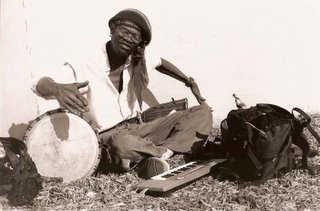
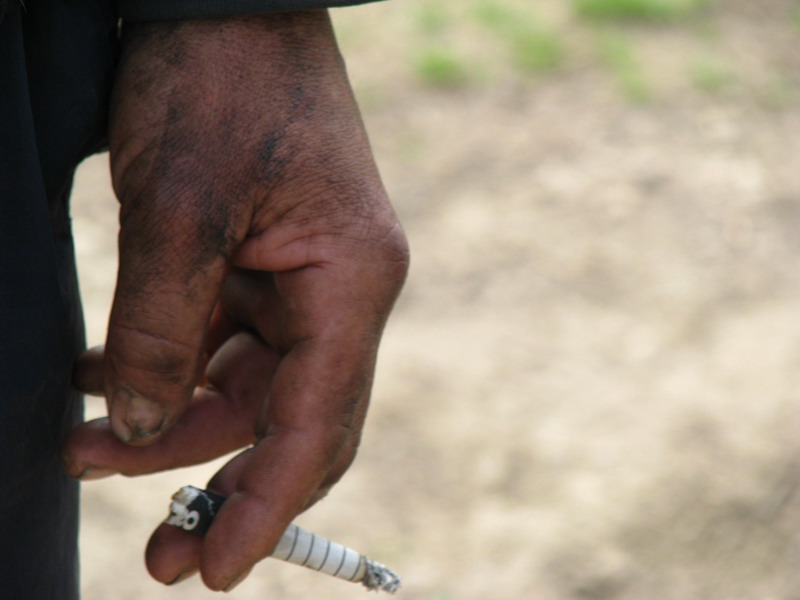
(this photo was taken by by

(the photo reminded me of this old poem I wrote after seeing a man like this rocking himself in the train station waiting for something)


He rocks and sways
Sucks and blows white milky smoke
Cradled in a crux of concrete
Comforted by a flame in his fingers


We rock and sway
At each blow we stretch by yellow fields
Cradled in steel grooves
And fight sleep with black potions


He closes his eyes
For his mother to arise
Or a friend or a phantom
To make good the promise


Open they wrinkle and curl
They worry and flood in the night
Broken eyes see golden fields under blue
But open to wipe away the promise


So he rocks and sways
Sucks and blows white milky smoke
Religiously making the sign of the promise
Of yellow, blue, of cradling and being cradled

Wednesday, February 27, 2008

Beauty and Worship, Art for Advocacy, part 6


I would like to talk about Advocacy as prophecy, 'as giving voice to the true under workings of the empire' as Walter Bruggemann might describe it. The story of David and Nathan the prophet show us how ‘story’/art can reframe life and give us an opportunity for personal insight and repentance. In a recent story I read a spiritual director was speaking with an eager young monk. The young monk was ready to receive his spiritual work assignment to help catapult him towards intimacy and union with God. his Spiritual director oddly asked the young monk to read Charles Dickens, David Copperfield. When the young monk complained of such a worldly assignment the spiritual director said that this young monk needed to learn empathy for normal people in normal life before he could journey into the depths of God.

Much of art is there to help us develop a basic empathy for our fellow human beings. When we sit in the others shoes for 200 pages we see the world different. I believe this is the heart of advocacy. No tricks, manipulation, no arm twisting, just getting to know people we usually are separated from through the mediums of art.


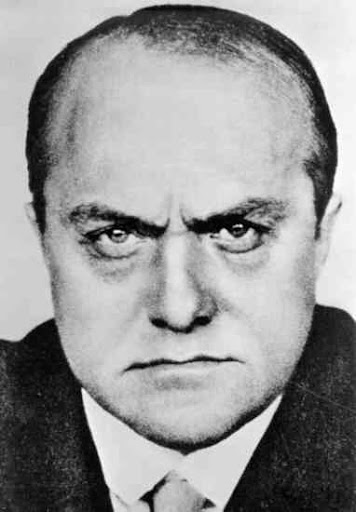
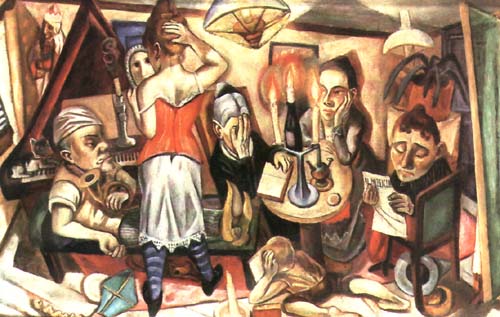
Meet Max Beckman. His painting exposed the Nazi oppression and got him exiled from Germany.

Max Beckman


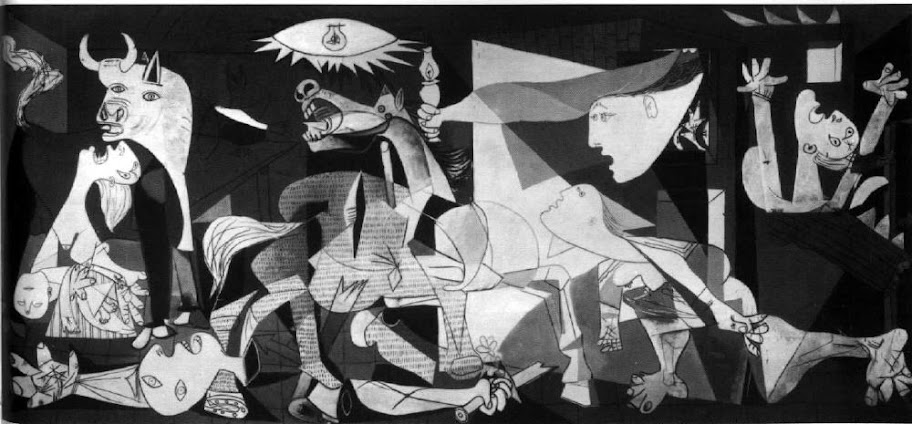
Guiernica, Picasso


Picasso put the city of Guiernica on the map with this devastatingly real depiction of the bombing of that city.

This is a photograph by Seth Allgire.

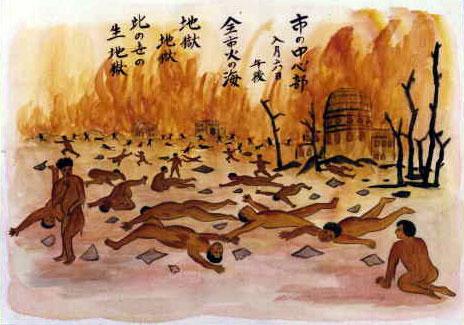
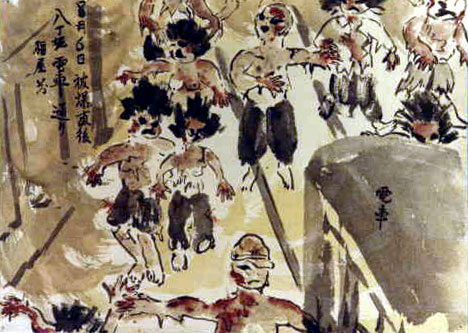
These are drawings done by survivors of Hiroshima. This is a great example of letting the victims tell their own story.

“…behind that frightened practice is a symbol gap in which we do not have symbols that are deep or strong enough to match the terror of the reality. What takes place when symbols are inadequate and things may not be brought to public expression is that the experience will not be experienced…’ p48 from The Prophetic Imagination

In the The National Story Project, we see a similar kind of amplifying of voices. This project gives air time to voices that would not ordinarily be heard. I am such there are many similar projects which could be designed to amplify voices of those we work among.


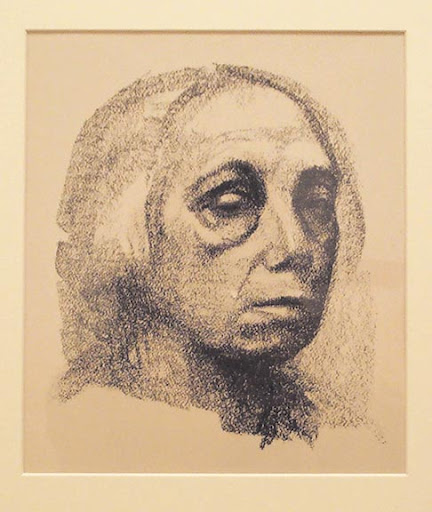
Kathe Kollwitz is another example of illuminating the jewish plight under the Nazi’s. She was a German lady who used wood block printing to print massive amount of pictures showing what was happening to the Jews. Her work is simple and stunningly human.

A more recent example of this kind of global advocacy is Francisco Botero's Abu Ghraib Paintings exposing the horrors of torture in US prison camps. He is giving voice to people who literacy have no advocate...no lawyer.

Kids with Cameras and our Sierra Leone fields, Beauty and Brokenness project in Sierra Leonne again put the cameras into the hands of the kids, letting us see through there eyes.


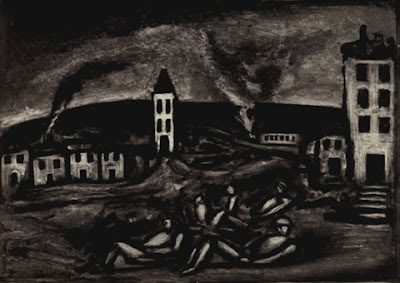
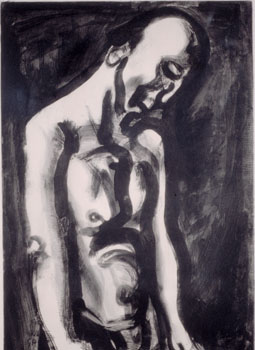
Georges Rouault, from the Miserere Series

Georges Rouault, from the Miserere Series

By allowing people to see the poor through a humanizing lens, a different angle, stories, songs, pictures, images which give names, face, personality, connect their humanity to ours and evokes a response to their dignity. We certainly do not need to be a Picasso or a Kollwitz to be used in such a way. If the process only helps the artist herself to w in empathy for her brother or sister it is worth all the time and attention given.

True Notebooks, by Mark Salzman gives an inside look at an Orange County Juvenile Detention Center. He combines his own writing describing his experience of teaching writting there as well as he writing of the kids. This is a nice combination of letting the kids speak for themselves and the writer giving voice to the subtleties of their lives.


This was the collaborative animation done with the kids at the Valley center. The hope was to show their beauty and personality. Let them read themselves some of their ideas and dreams.


We can think of advocacy terms of gathering the voices and songs of the poor, of all people. Here is its connection to worship. We gather them from the margins and as Christ does, we place the poor in the center with Him.

If our art starts and finishes in Advocacy, I am afraid it will be shallow and not do justice to the beauty of the world. I believe advocacy needs to be the last and almost unconscious byproduct of art for play and awe, of contemplative art, of art building and expressing the lives of our communities, and art for therapy which is helping us plumb the depths of our inner worlds. Advocacy needs to come out of a deep and long look at the world in all its horrors and beauties. And hopefully our advocacy in the end will be a celebration of isolated people coming together and seeing each other for the first time as fully human, beautiful, and created in the image of God.


'Beauty and Worship' Concluding thoughts…

Here are a couple considerations for worship music.

worship music = music+poetry+theology


If our worship is a sacrifice...we should consider studying the greatest music, the best theology we are aware of, and reading and understanding poetry. Most people complain about mediocre worship music. I don't see many considering higher level theological training, musical training, and poetry studies. It might help?

If worship is about the gathering of creation (into microcosm ourselves and community) and offering it back to God, liturgy ie the work of the people

Then the more we gather the more attentively we gather the scattered parts, voices, tonalities, rythmes, theological prayer experiences, etc, the more rich and beautiful will be our offering.

Let us expose ourselves to great art and great suffering and great theology and integrate it through reflection in art activities


Ideas for collaborative work.


  • Short international films (each using birds eye lense, moving left to right)

  • Books/ story telling (on chosen themes try to generate poetry and prose around an idea like distance separation, dark, light) get a range of kids parents, audio video reflections?

  • Blogging our work (formatts

  • Music (worship, narrative, or experimental)

  • “Collections” –Sarah said she likes to collect strange things throughout Calcutta. What if we all tried to collect photograph and reflect on the collections?

  • A WMF Art exhibit, installations sounds, impressions, voices, images, videos.

  • Inventions and ‘merge si asa’ documentation, ingenious ways people solve basic life problems. (ie. Drill gun for grinding eggplant)

  • there are certainly many other ideas to be discovered.


Monday, February 25, 2008


This was created over a few months of learning about facial features, drawing and painting them together. Finally we put it all together and then made the sound track with the help of Ferenkeh Tarawally who has been visiting from from Sierra Leonne. He gave me a few Djimbe lessons while he was with us. The text was adapted from a piece written by David Chronic on working with children with varying degrees of attachment disorder.

(text read in animation)

The Face

baby puts everything in her mouth

ingesting her external environment

making it a part of herself.

a drawn face is moved

up and down in front of her

she smiles back.


the Face is the primal prototype

of religious experience

at around six months

the child becomes aware

that the face is not

constantly present.


the Face in whose Presence

each person was created

is that which constantly seeks us (Luke 19:10).

In His incarnation,

the Son has shown us

the Face of God.


"And all of us with unveiled faces,

seeing the glory of the Lord

as though reflected in a mirror,

are being transformed into the same image

from one degree of glory

to another; For it is God who said,


‘Let light shine out of darkness,’

who has shone in our hearts

to give the light of the knowledge

of the glory of God in the face of Christ.(2 Corinthians 3:17-18)

the Face that finds us and liberates us

will never leave or abandon us (Hebrews 13:5).


We no longer find identity

in opposition to others,

now identity is in relationship to the Son,

By responding, the Triune God becomes our primary attachment.

constant loneliness is dissolved in His Face

to whom we belong and correspond. (pause)


As community we come together as a sign

that our cosmic loneliness has found the constant presence of the Face.

As community, we invite people into the Spirit of God

to hear the affirmation of the Father,

and we together incarnate a “face” of consistency,

fidelity, love, and limits, finding together the Face of God.

Thursday, February 14, 2008

Lara Lahr works in inner city Philadelphia with mission year and have been part of The Simple Way in Philadelphia. This is a good example of photography which draws you in and invokes a story. With great economy, much is said. Thanks Lara. Please keep looking through the view finder.

Here was her reflection on the photo...

"On my previous blog, I talked about how contentment has been a recurrent theme lately in my life. In many areas of my life, I can truly say that I am closer than ever to finding this contentment. I have grown not only content, but thrilled to be a mom of 3 girls. I have become content living in a city like Philadelphia which is quite different from Wilmore Kentucky (where we lived before). I am content with the low salary (in American standards) that we live on which keeps us from buying too much stuff. I have become content with a messy house (at times). I am content with the cars that God has blessed us with. I can't tell you how many comments I get, even from friends that are like minded to me, that I should get a new car. I have become content with our lack of closet space, drafty house, unfinished projects, and toilet that you have to turn the water off to every time you finish using it...read the rest of the article"

Monday, February 11, 2008

Beauty and Worship: Art for Community, part 5


When art is based in Community, the artist vocalizes the community experience. The artist is able to give expression to more than just her own personal experience.

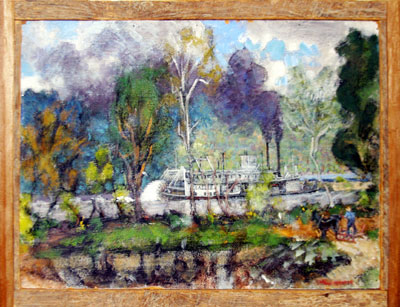
Thomas Hart Benton went from the Paris art scene, the cutting edge at the time, and from there developed a desire to connect and articulate common themes coming from common people in the southern United States.


As Thomas Hart Benton and others such as Harlan Hubbard described by Wendel Berry did, artists in local rooted communities have the opportunity of articulating directly our common themes, vision, identity, and experience. The gift they offer back to their communities is a sense of vision and purpose, a sense of their place in history and the importance of the ordinary loving work taking place in the community.

Collaboration

The Give and take, the dance of the Holy Trinity is our model and mandate to be collaborating partners in any work we do. We are made to work together. By making art together we make visible our common work together that is orchestrated by the Holy Spirit.

By doing collaborative work we are able to do a series of reflections, learn to give and take, and learn to risk. For people who have been trained in individualistic, competitive culture where each person must prove he is better that all the rest, this kind of collaboration can be healing. For children at risk who feel powerless and voiceless this kind of dignifying collaboration can be revitalizing and hope giving.


Kids animation Project


This project involved most of the kids at the center for at risk youth, The Valley Center. In it their own voices and personalities are heard, their mark is made. The process in itself of photographing, coloring, and drawing, and all the way until we watched the final product together was fun and life giving.

Flower garden Painting

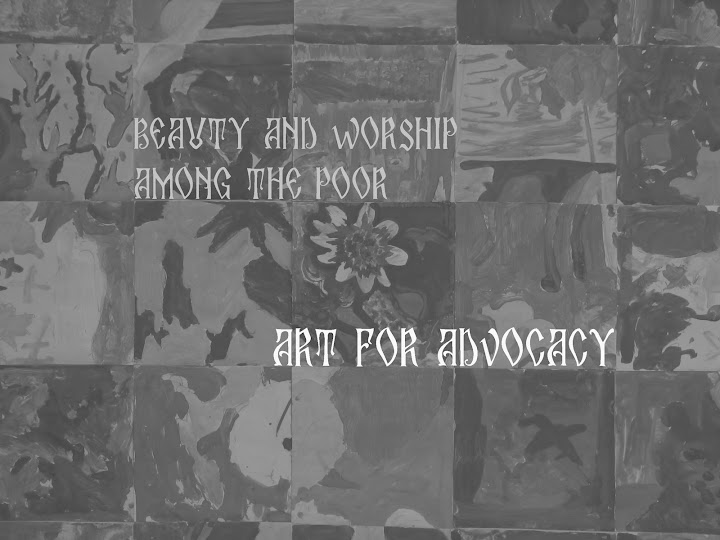
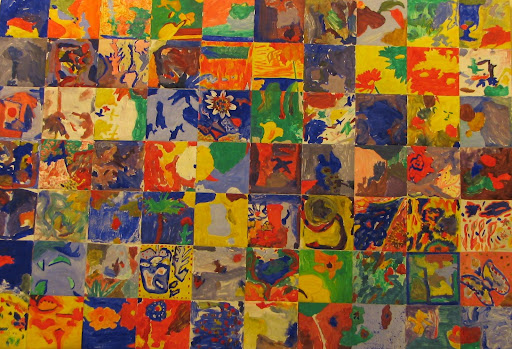
For this collaboration I gave the kids squares with blind contours drawn on them and they were able to paint them how they wished. The funnest moment was seeing their faces light up when they saw the final collection of all the squares. They ran around finding the other staff telling them that they had made this piece together.


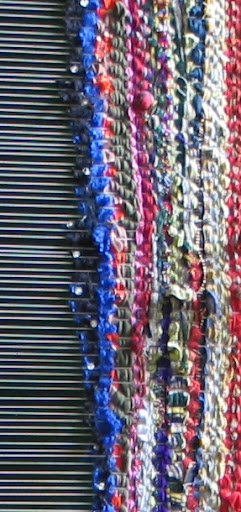
In the chapel carpet we have another example of collaboration. The other Word Made Flesh communities sent us articles of used clothing which intersected with their communities and we cut them into strips and have woven them into a rug to be used in the center of the chapel. We have used the process as a way to pray for the other fields, and now after a couple years of weaving in prayers, the rug is almost finished, and will be a reminder of the other communities present with us in our times of prayer.


Wendell Berry’s Short stories are a great example of using writing to find voice for the community experience. They are simple beautiful and dignifying to the loving, patient work of good people. More of this kind of reflective fiction could be cultivated among us. There are many amazing characters who we we meet on a daily basis whose lives deserve to be described and celebrated in reflective writing. Some of our stories which appear in prayer letters are great starts to reflective contemplative writing which gives voice to our common experience as communities.


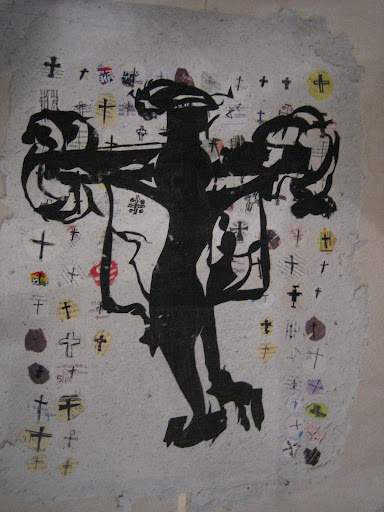
This is a piece of hand made paper which came together during a talk I gave called "Finding Joy in the Midst of Suffering" to the Beggars Society in Omaha. Again, the beauty of the piece is in the diversity of contributions, prayers, and the lives and suffering represented by each of the people who placed their crosses into the wet paper pulp.

In 'Art for Community' we find our voice, the community participates in collaborative projects which articulate common vision and purpose. We collaborate in a material way, making visible signs of our collaborative and redemptive work among the poor. When we work together, in mutual submission and love we become living icons of the Holy Trinity.

Find more examples of 'Art for Community'


Tuesday, January 29, 2008

Movements into Silence

I finally finished these music tracks I am calling, Movements into Silence, Contemplative Music on my 30 dollar Classical guitar, recorded on the voice recorder Will John gave me last year. Below is the description.


Movements into Silence

(download CD free HERE)


Movements into Silence

  1. Movement 1
  2. Movement 2
  3. Movement 3
  4. Movement 4
  5. Twenty Minute Silence


Continuous Prayer and Silent Prayer

Growing up going to all night prayer meetings with my dad while I was in high school nurtured in me a life of prayer. Years later I found myself in an all night prayer service at a Romanian Orthodox monastery on the other side of the ocean. The fellowship hall of my dad's prayer meetings couldn't have been more different from the icon filled and gold leafed ancient chapel, but despite the differences I felt strangely at home.


Known as Hesychism in the Orthodox east and now popularized in liturgical churches in the west as the Centering Prayer movement, the heritage of continuous prayer is the wealth of our Christian faith. Many believers are rediscovering the rich traditions of prayer practices in works like ‘The Way of the Pilgrim’ which describes a Russian peasants journey from destitution into the life of continuous prayer. He learns to pray the Jesus Prayer, 'Lord Jesus Christ have mercy' continuously and we watch it turn from ritual habit into intimacy with God. As we walk, we pray; as we breathe, we pray; as our heart beats, we pray; as we encounter the poor, we pray; as we do justice to the image of God now seen in the poor, we pray; as we sleep, we pray. Centering prayer is a habit of prayer which refocuses our attention, centering us on Christ twice a day so that we can live continuously in Him.


'In repentance and rest is your salvation, in quietness and trust is your strength', Isaiah 30:15


Silent prayer is a purifying fire. This sanctifying movement of the Spirit within us calls us to bring our histories, and everything within our spheres of life into submission to Christ. This recording was born out of desire to be faithful to the spirit of contemplative prayer. It is my prayer that we may return continually to Christ, to meet Him in silence, and allow Him to unmask our false selves and offer us back into the world as a whole persons capable of encouraging wholeness in the Body of Christ, that we may be a fragrant offering for the life of the world.


In centering prayer we are encouraged to make a habit of 20 minutes of complete silence in the morning and 20 minutes before the evening meal. Without distraction, relaxed, and concentrated on a word or phrase such as, “Lord Jesus Christ, have mercy”. The word or phrase helps to refocus us as we are distracted by a myriad of thoughts. Track 1-4 are10 minute instrumental pieces and Track 5 is 20 minutes of silence begin and end with chimes. Below are two prayers I find helpful for beginning and ending times of prayer.


If you found this helpful, I would recommend, far more than my own music, recordings of the music
written by of Hildegard von Bingen (1098-1179). Also, consider Arvo Part's 'Alina', and a collection of choral and violin pieces by Bach called 'Bach: Morimur' for facilitating times of silence and contemplation. For more reading on continuous prayer see The Pilgrim and the Pilgrim continues on his Way, anonymous, works by Thomas Keating on centering prayer, and one of my favorite books on prayer and contemplation Clowning in Rome, by Henri Nouwen .


The artwork for the CD comes from a series of meditative wash drawings based on slow blind contours.


All this music is free to download, share and you are free to delete it when it is no longer useful to you, any comments are welcome, please e-mail them to jamklepac@gmail.com.


Movements into Silence CD

(download for free HERE)

Trisagion Prayers.

+Glory to Thee, our God, Glory to Thee.

O Heavenly King, Comforter, the Spirit of Truth,

Who art everywhere present and fillest all things,

the Treasury of good things and Giver of life:

Come, and abide in us, and cleanse us from every stain,

and save our souls, O Good One.


+Holy God, Holy Mighty, Holy Immortal: have mercy on us. (3 times)


+Glory to the Father, and to the Son, and to the Holy Spirit,

both now and ever, and unto the ages of ages. Amen.


All-Holy Trinity, have mercy on us.

Lord, cleanse us from our sins.

Master, pardon our iniquities.

Holy God, visit and heal our infirmities for Thy name's sake.

Lord, have mercy. (3 times)


+Glory to the Father, and to the Son, and to the Holy Spirit,

both now and ever, and unto the ages of ages.


Our Father, who art in Heaven, hallowed be Thy name.

Thy Kingdom come, Thy will be done, on earth as it is in heaven.

Give us this day our daily bread, and forgive us our trespasses

as we forgive those who trespass against us;

and lead us not into temptation, but deliver us from the evil one.

For Thine is the Kingdom, and the power, and the glory,

of the +Father, and of the Son, and of the Holy Spirit,

now and ever and unto ages of ages. Amen.


First Prayer of St. Basil the Great


Almighty Lord, God of the Powers and of all flesh,

Who livest in the highest and carest for the humble,

Who searchest our hearts and affections,

and clearly foreknowest the secrets of men;

eternal and everliving Light, in Whom is no change nor shadow of variation;

O Immortal King, receive our prayers which at the present time

we offer to Thee from unclean lips, trusting in the multitude of Thy mercies.

Forgive all sins committed by us in thought, word or deed,

consciously or unconsciously, and cleanse us from all defilement of flesh and spirit.

Grant us to pass the night of the whole present life with wakeful heart and sober thought,

ever expecting the coming of the radiant day of the appearing of Thy only-begotten Son,

our Lord and God and Saviour, Jesus Christ, when the Judge of all will come with glory

to render to each according to their deeds. May we not be found fallen and idle,

but awake and alert for action, ready to accompany Him into the joy and divine palace of His glory,

where there is the ceaseless sound of those keeping festival and the unspeakable delight

of those who behold the ineffable beauty of Thy Face.

For Thou art the true Light that enlightens and sanctifies all,

and all creation sings to Thee throughout the ages. Amen.


Movements into Silence CD

(download for free HERE)

Joel and Monica Klepac
www.wordmadeflesh.com
www.wmfromania.com
www.joelklepac.blogspot.com
www.artincommunityamongthepoor.blogspot.com


(all music was recorded, written an played by Joel Klepac at Jonah and the Whale Productions, all album art is done by Joel Klepac)

Thursday, January 24, 2008

Beauty and Worship: Art for Therapy, part 4


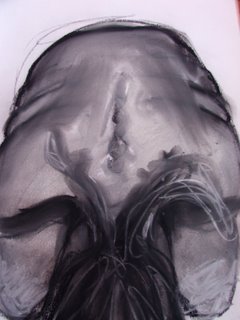
Sarah Lanse charcoal drawing


Paradigm of bringing things from darkness to light

Sarah’s drawing is an image of the contemplative process of illuminated darkness, re written pages, and of excavating roots. All themes that have come up as we have discussed 'The Human Condition' by Thomas Keating

'Gathering' is bringing together the parts missing in darkness. In 'art for play' or 'awe' it is bringing together the materials that are left unnoticed, in 'art for contemplation the truths, the beauty, making connections, and now in art for therapy, it is gathering our lost and forgotten roots, our inner emotional basements, re framing, rewriting them into the rest of who we are so that we are not split and fragmented people. If we perpetuate a false self, a fragmented person, we only add to the fragmentation of or world.


This dis integration can happen easily in otherwise healthy people when exposed to the harsh suffering of the worlds poor wherever in the world. Counselors working with child abuse victims are often required to receive 4 hours a week of counseling do deal with their own secondary trauma caused by listening to the stories of abused children. When working among the poor the stories we are hearing on a regular basis are no less traumatic. The injustices suffered by the children we are serving among will over a short time plunge us into compassion fatigue. No one is immune. In order to survive for the long term one needs to take definitive steps to reflect and process this secondary trauma, that of hearing of the traumas of others.

Self-assessment for compassion fatigue

Answering "yes" or "no" to the following nine statements will help you assess your risk for compassion fatigue:

Personal concerns commonly intrude on my professional role.

Yes

No

My colleagues seem to lack understanding.

Yes

No

I find even small changes enormously draining.

Yes

No

I can't seem to recover quickly after association with trauma.

Yes

No

Association with trauma affects me very deeply.

Yes

No

My patients' stress affects me deeply.

Yes

No

I have lost my sense of hopefulness.

Yes

No

I feel vulnerable all the time.

Yes

No

I feel overwhelmed by unfinished personal business.

Yes

No

Answering "yes" to four or more questions may indicate that you're suffering from compassion

fatigue. [This instrument, developed by the authors, has not been validated, but the results should serve as a quick check of your state of mind.] If you're interested in determining your risk for burnout, try taking the Maslach Burnout Inventory. It may be obtained through the Consulting Psychologists Press at 800-624-1765 or through their Web site at www.cpp-db.com.

­­­­­­­­­­­­­­­­­­

  • Much of our coping and integrating of traumatic situations and stories comes from learning to be attentive and attuned to our inner world. It allows us to get to the point where we ask ourselves, ‘how is ‘x’ situation affecting me?

  • It is getting this nagging abstract feeling out somehow. Naming the feeling steals its power over us.

  • Lung process, heart process, and digestion give us paradigms of gathering in, processing, and letting go/ releasing. We can only process so much at a time. Increased traumatic/ difficult experience necessitates increased time to process, and integrate the experiences into our selves.

Here are some ideas of how Art as therapy can help us move towards habits of processing our experiences in service among the poor.

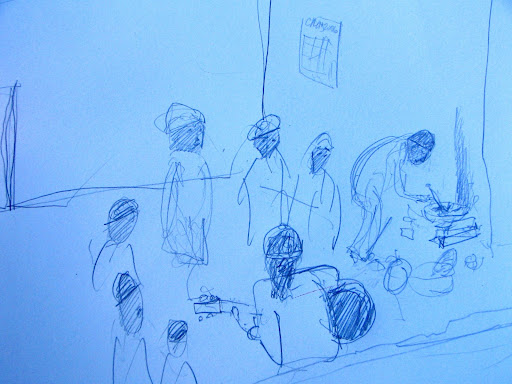
This is an example of my own sketched memories from an evening on the streets with the boys. This non verbal processing method is direct and immediately externalizes an experience that can eat away at you without you realizing it. Journaling after such street meetings or anything else that is potentially traumatic is an intentional way to precess and externalize the experience of another's suffering. It does not solve the injustice by takes steps towards integrating it into you understanding of God and the world.

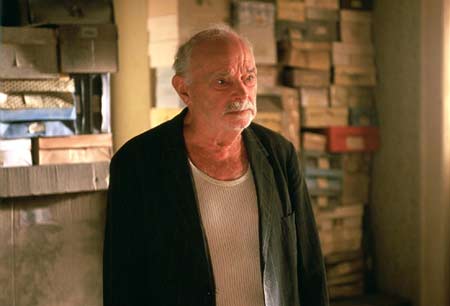
still from the movie 'Everything is illuminated'

Holocaust films help reintegrate, finding some meaning in the insanity, and learning to live on with the loss or horror. The image of boxes of the remaining possessions of each victim is a metaphor for our built up unnamed traumas. They have a certain silent power over us if they are unopened and un integrated, and often we are oblivious to them all the way until we burn out and leave our place of service.

Our art teacher at the Valley Center Nina did a project with the boys living on hte streets with collected pieces of wood and interesting branches. The boys spent most of their time cutting cleaning and carving out of the branches they selected from the pile. When they were finished they were asked to give a name to their sculpture. In the process of naming this abstract form many came up with revealing ideas. One sculpture was a cut off small tree with the large roots exposed. It was cleaned and put upside down and gashed were cut about an inch apart up the length of the tree. In the end he named the piece, 'the sad tree'. The tree perfectly mirrored the boys arms which have the gashes form self mutilation. He was able to name the sadness in himself in a non threatening way. Darkness turns to light, unnamed feelings are named and
rendered less powerful.

Often journaling about counseling with kids or about a traumatic story told to us can get us steps closer to understanding how we are being affected.


In comparison to the suffering of the person we care about it is easy to discount this secondary suffering we feel. It is true that we cannot compare the first hand trauma and the second hand trauma, but the affects on our continued functioning are the same over time though less extreme. For this reason we have to be willing to deal with how ministry is affecting us as workers, it is important because our ability to love the least among us depends on it.

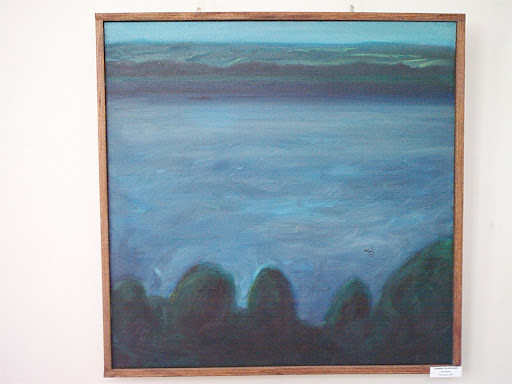
Within a few years of coming to Romania a little boy named Mihaita was hit by a car and killed. This painting was part of my own processing the trauma I had of being asked to photograph the funeral proceedings from stat to finish. It was like having my nose pushed into this injustice. The pain I felt seemed so trivial next to the memory of the boys mother screaming. I have not forgotten this boys face but I am no longer debilitated by the unnamed emotional pain. It is re written into my story my history and my faith.

  • In 'Art for Therapy' we are talking about gathering the boxes of our dark closets, ‘basements’, ‘excavating roots’, ‘allowing old pages to be re-written’ so we can be fully present as a whole integrated persons.

See more examples of 'Art for Therapy'